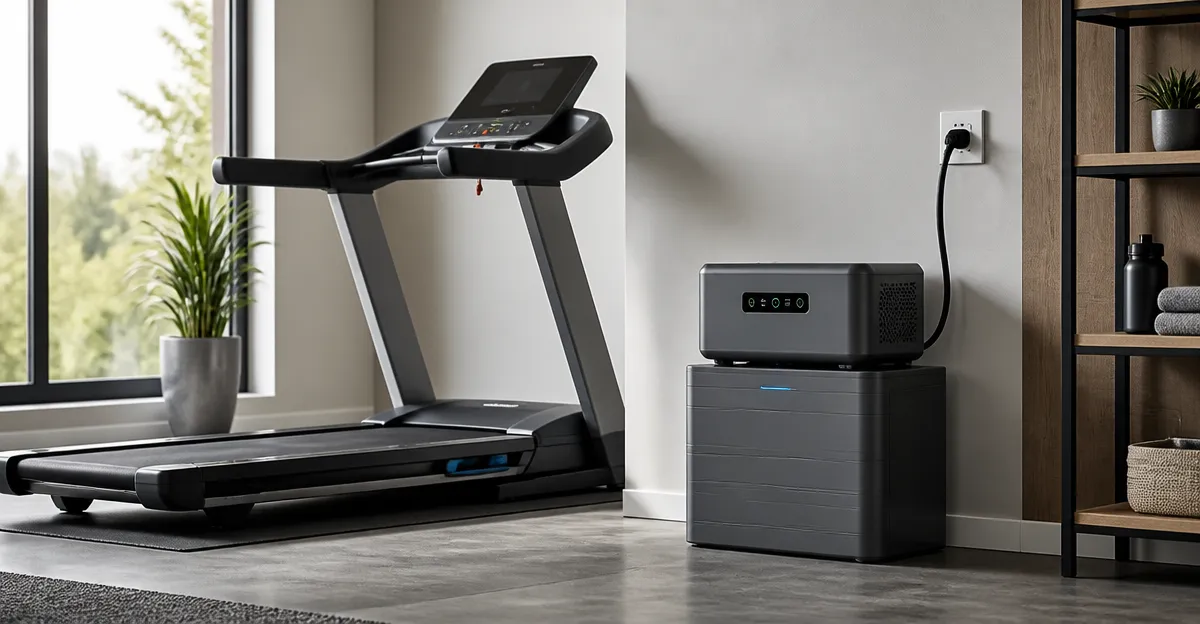
The Ultimate Guide to Treadmill Battery Backup Runtime: How to Calculate, Maximize & Extend Battery Life
Introduction
In today’s fitness environment, treadmill owners increasingly rely on battery backup systems to maintain operation during power interruptions. This guide explains the fundamental concepts behind treadmill battery runtime, provides step‑by‑step calculations, and outlines strategies to maximize and extend battery life. Readers will learn how to assess their power needs, select appropriate backup solutions, and implement maintenance practices that ensure reliable performance. By the end of the article, one will possess the knowledge required to make informed decisions and keep a treadmill operational when the grid fails.
Background and Context
Battery backup systems for treadmills are essentially uninterruptible power supplies (UPS) designed to deliver sufficient voltage and current for the duration of an outage. The primary components include the battery bank, inverter, and control circuitry that manage load distribution. Understanding voltage (V), current (A), and power (W) is essential because treadmill motors typically draw between 1.5 kW and 3 kW depending on speed and incline. Moreover, battery chemistry—lead‑acid, lithium‑ion, or nickel‑metal hydride—affects energy density, charge cycles, and overall lifespan.
Regulatory standards such as UL 1778 and IEC 62040 provide safety guidelines for UPS devices used with fitness equipment. Compliance ensures that the backup system can handle surge currents without overheating or causing electrical hazards. Additionally, manufacturers often specify a recommended backup duration, commonly ranging from 15 to 30 minutes, which aligns with typical emergency power needs. Users should verify that the selected system meets both the manufacturer’s specifications and local electrical codes.
Calculating Required Runtime
The first step in designing a reliable backup solution is to calculate the required runtime based on treadmill power consumption and desired outage duration. One can use the formula Runtime (hours) = Battery Capacity (Ah) × Battery Voltage (V) / Power Consumption (W). For example, a treadmill that consumes 2,000 W operating at 120 V requires approximately 16.7 Ah of battery capacity for a one‑hour runtime (2,000 W ÷ 120 V = 16.7 A; 16.7 A × 1 h = 16.7 Ah). Adjust the calculation for longer durations by multiplying the desired hours accordingly.
It is important to incorporate a safety margin of at least 20 % to account for inefficiencies in the inverter and battery aging. Therefore, a user seeking a 30‑minute backup for a 2,000 W treadmill should select a battery bank providing roughly 10 Ah at 120 V, plus the safety margin, resulting in a minimum of 12 Ah. This conservative approach prevents premature depletion and protects the treadmill’s motor from voltage sag.
Selecting the Right Battery Backup Solution
When evaluating backup options, consider the following criteria: energy density, discharge rate, cycle life, and physical footprint. Lithium‑ion batteries offer superior energy density and can deliver high discharge rates, making them ideal for compact installations. However, they carry a higher upfront cost compared with sealed lead‑acid (SLA) batteries, which are more affordable but bulkier and have shorter cycle life.
For home gyms with limited space, a lithium‑ion UPS such as the IXL Ultimate Summer 4th‑to‑5th Grade Workbook can be repurposed as a portable power pack, provided the voltage and connector specifications match the treadmill’s requirements. Although primarily an educational resource, the workbook’s robust packaging demonstrates the importance of durability in portable devices. Users who prioritize cost‑effectiveness may opt for a sealed lead‑acid system paired with a smart charger that prevents over‑charging and extends battery life.
Integrating Backup Power with Treadmill Controls
Proper integration ensures seamless transition from mains power to battery backup without interrupting the workout. Most modern treadmills feature an automatic transfer switch (ATS) that detects loss of utility power and switches to battery mode within milliseconds. If the treadmill lacks an ATS, an external relay module can be installed to achieve similar functionality.
Installation should follow the manufacturer’s wiring diagram, observing polarity and grounding requirements. It is advisable to consult a certified electrician to verify that the backup system complies with local electrical codes and does not void the treadmill warranty. Regular testing of the ATS, ideally on a monthly basis, confirms that the system operates as intended during an actual outage.
Maintenance Practices to Extend Battery Life
Battery longevity is heavily influenced by maintenance habits such as temperature control, charge‑discharge cycles, and periodic equalization. Batteries stored in environments exceeding 30 °C (86 °F) experience accelerated degradation, reducing usable capacity by up to 20 % per year. Maintaining ambient temperatures between 15 °C and 25 °C (59 °F‑77 °F) optimizes performance.
Implementing a shallow‑cycle regimen—charging the battery after each use and avoiding deep discharges below 20 %—significantly extends cycle life. For lead‑acid batteries, a monthly equalization charge helps balance cell voltages and prevent sulfation. Lithium‑ion batteries benefit from a storage charge of approximately 50 % if they will not be used for extended periods.
Comparison and Selection Guide
| Feature | Lead‑Acid (SLA) | Lithium‑Ion |
|---|---|---|
| Energy Density | Low (30‑40 Wh/kg) | High (150‑200 Wh/kg) |
| Initial Cost | Low | High |
| Cycle Life | 300‑500 cycles | 1,000‑2,000 cycles |
| Maintenance | Requires equalization | Minimal maintenance |
| Weight | Heavy | Light |
Choosing between these technologies depends on budget, space constraints, and desired runtime. Users with modest power needs and ample storage space may find sealed lead‑acid solutions sufficient. Conversely, athletes who require frequent, rapid deployments and wish to minimize floor load should consider lithium‑ion units despite the higher price point.
Best Practices & Tips
- Perform a load analysis of the treadmill to verify peak power draw before selecting a battery bank.
- Include a battery management system (BMS) to monitor temperature, voltage, and state of charge in real time.
- Schedule quarterly full‑discharge tests to assess actual runtime against calculated expectations.
- Keep a log of battery performance metrics to identify trends and plan replacements proactively.
- Utilize surge protectors to shield the UPS from voltage spikes that can damage both battery and treadmill electronics.
Applying these practices not only maximizes runtime but also safeguards the treadmill’s motor and control board from premature wear. Regular documentation of battery health enables owners to make data‑driven decisions regarding upgrades or replacements. By integrating a disciplined maintenance routine, one can achieve up to 30 % longer service life compared with ad‑hoc usage.
Frequently Asked Questions
- How long can a typical treadmill run on a UPS? Most consumer‑grade UPS units provide 15‑30 minutes of runtime for a 2 kW treadmill, which is sufficient to complete a warm‑up or cool‑down session.
- Can I use a car battery as a backup? While a car battery can deliver the required current, it is not optimized for deep‑cycle discharge and may suffer reduced lifespan if used regularly for this purpose.
- What safety features should I look for? Over‑voltage, over‑current, short‑circuit protection, and temperature monitoring are essential to prevent hazardous conditions.
- Is it necessary to have a professional install the system? Installation involving high‑voltage wiring should be performed by a licensed electrician to ensure compliance with code and warranty requirements.
- How often should I replace the backup battery? Replacement intervals vary by chemistry; lead‑acid batteries typically require replacement every 3‑5 years, whereas lithium‑ion units may last 7‑10 years with proper care.
- Can I expand the battery bank later? Modular UPS designs allow for future expansion by adding parallel battery packs, provided the inverter’s capacity supports the increased load.
- Do I need a separate charger for the battery? Most UPS systems include an integrated charger; however, using a dedicated smart charger can improve charge efficiency and extend battery life.
Conclusion
This guide has outlined the essential steps to calculate, select, and maintain a treadmill battery backup system that delivers reliable runtime during power outages. By understanding power requirements, evaluating battery technologies, and adhering to best‑practice maintenance, one can ensure uninterrupted training sessions and protect valuable equipment. The integration of a well‑designed UPS not only enhances safety but also adds resilience to a home gym environment. Readers are encouraged to apply the presented methodologies and select a solution that aligns with their specific performance goals and budget constraints.
Products Featured in This Guide
IXL Ultimate Summer 1st‑to‑2nd Grade Workbook
Price: Not listed | Rating: Not listed
Why it is featured: This workbook exemplifies durable, educational products that can occupy users during treadmill downtime, reinforcing the guide’s recommendation to utilize backup periods productively.
IXL Ultimate Summer 4th‑to‑5th Grade Workbook
Price: $12.33 | Rating: 4.9/5.0 (51 reviews)
Why it is featured: The workbook provides a concrete example of a high‑quality, affordable product that can be leveraged during power‑outage periods, illustrating the guide’s suggestion to combine fitness routines with educational activities.