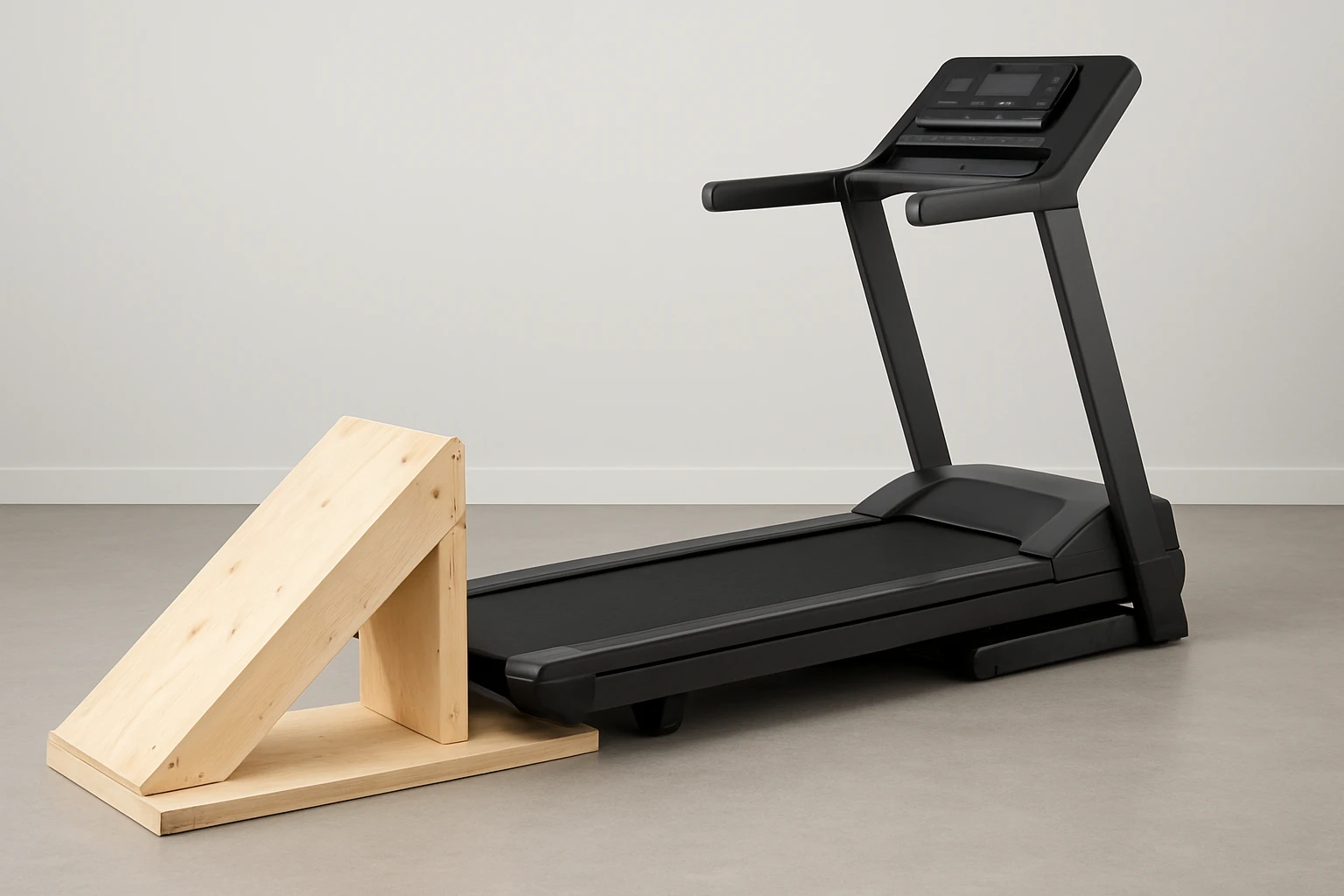
How to Build a Safe DIY Incline Adapter for Your Folding Treadmill: Step‑by‑Step Guide & Safety Tips
Introduction
Many home fitness enthusiasts seek a simple method to increase the walking or running angle of a folding treadmill without purchasing an expensive new model. A DIY incline adapter can provide the desired gradient while preserving the original equipment. This guide explains how to construct a reliable adapter using commercially available riser blocks and anti‑slip mats, and it outlines essential safety considerations.
The reader will learn how to evaluate the treadmill, select appropriate materials, assemble the adapter, and verify stability before use. By following each step, one can achieve a functional incline that mimics commercial treadmill settings, thereby enhancing cardiovascular intensity and muscle engagement.
Although the instructions are detailed, the project does not require advanced carpentry skills. All required components are lightweight, easy to handle, and designed for home‑gym environments. The result is a cost‑effective solution that can be adjusted or removed as needed.
What You'll Need
- Four to eight stackable treadmill incline riser blocks (e.g., Stackable Treadmill Incline Riser Blocks).
- Six premium silicone anti‑vibration mats (e.g., Oryqvane Treadmill Mat Pads).
- A foldable protective floor mat for larger coverage (optional, e.g., Stepwaver Foldable Treadmill Mat).
- Measuring tape, level, and a pencil for marking.
- Non‑slip adhesive strips (optional for extra security).
- Basic hand tools such as a screwdriver and a rubber mallet.
Step‑by‑Step Instructions
1. Assess Space, Weight Capacity, and Safety Requirements
Begin by measuring the width and length of the treadmill base and confirming the floor can support the additional load. Most folding treadmills weigh between 150 and 250 pounds; each riser block can support up to 4,000 pounds when combined, providing ample safety margin. Use a level to verify that the floor is even; uneven surfaces may cause the treadmill to tilt unintentionally.
Identify any obstacles such as doorways or low ceilings that could interfere with the folded position of the treadmill. Ensure that the intended incline does not exceed the manufacturer’s recommended maximum angle, typically around 12–15 degrees for home models.
Document the desired incline height. Each riser block adds approximately 1.38 inches (3.5 cm) of elevation. Stacking two blocks yields roughly a 2.8‑inch rise, which translates to a moderate incline for most users.
2. Prepare the Working Area and Gather Materials
Clear the surrounding floor space to prevent tripping hazards. Lay the optional Stepwaver Foldable Treadmill Mat on the floor if the treadmill will be used on hardwood or carpeted surfaces. This mat measures 55" by 23.6" and offers heavy‑duty PVC construction that absorbs vibration and reduces noise, creating a quieter workout environment.
Place the Oryqvane Treadmill Mat Pads near the treadmill legs. These 4" x 4" silicone pads provide dual‑sided non‑slip grip and shock absorption, protecting both the treadmill and the floor from scratches.
Arrange the Stackable Treadmill Incline Riser Blocks in a tidy stack so that the correct number of units is readily accessible.
3. Install Anti‑Slip Mats Under Each Treadmill Leg
Lift each leg of the treadmill slightly using the rubber mallet, and position one Oryqvane Treadmill Mat Pad directly beneath the foot. The dual‑sided textured surface secures the leg and reduces vibration transmission to the floor.
Press the mat firmly until it adheres to the floor. If additional security is desired, apply a thin strip of non‑slip adhesive along the mat edges. Repeat this process for all four legs, ensuring each pad is aligned with the treadmill’s mounting points.
The silicone composition of the pads remains flexible under load, preventing cracks or deformation even after prolonged use. Their compact size allows them to be stored easily in the included storage bag when not in use.
4. Position and Stack the Riser Blocks
Determine the number of riser blocks required for the target incline. For a modest 3‑inch increase, stack two blocks; for a more aggressive 5‑inch rise, stack three blocks. Place the first block directly on top of the silicone mat beneath each treadmill leg.
Align the L‑shaped base of each block with the leg footprint to ensure even weight distribution. The blocks feature a rubberized anti‑slip bottom that grips the silicone mat, while the textured top surface prevents the treadmill foot from sliding.
If higher elevation is needed, stack additional blocks, but do not exceed the manufacturer’s safety recommendation of three blocks per leg. Over‑stacking may compromise stability and increase the risk of tipping.
For users who require greater load capacity or a more robust design, the Eloslos Heavy Duty Incline Riser Blocks provide support for up to 4,000 pounds per set and incorporate an upgraded L‑shaped design for broader contact area. These blocks are priced at $16.99 and have a perfect 5‑star rating from twelve reviewers.
Another affordable alternative is the Penitue Adjustable Incline Riser Blocks, sold in an eight‑piece pack for $13.99. They are constructed from high‑strength PP and TPE, offering a balance between durability and weight.
5. Secure the Treadmill and Verify Stability
Once the blocks are stacked, gently lower the treadmill onto the assembled platform. Verify that each leg sits evenly on the top of its respective block and that no gaps are present.
Use a level placed on the treadmill deck to confirm that the surface remains horizontal across the width. If the level indicates a tilt, adjust the block heights accordingly until the deck is level.
Perform a low‑speed test run for 2–3 minutes while observing for any wobbling or shifting. If movement is detected, add a thin non‑slip strip between the mat and block, or consider using an additional silicone pad for extra friction.
After confirming stability, the treadmill can be used at the desired incline. Periodically re‑check the blocks and mats for signs of wear, especially after several months of intensive use.
Tips & Pro Tips
- Label each riser block with a small piece of masking tape indicating its height; this simplifies future adjustments.
- Store the Stepwaver Foldable Treadmill Mat in its folded form to conserve closet space.
- When using the treadmill on carpet, place the silicone pads directly on the carpet fibers to prevent indentation.
- Do not exceed three stacked blocks per leg; excessive height can raise the center of gravity and increase tipping risk.
- Inspect the anti‑slip surfaces of the blocks regularly; replace any that show cracking or loss of texture.
Troubleshooting
Problem: Treadmill shakes during high‑intensity intervals.
Solution: Add an extra layer of Oryqvane Treadmill Mat Pads under each block to increase damping.
Problem: Blocks slide on hardwood floors.
Solution: Apply a thin strip of double‑sided non‑slip tape to the bottom of each block, or replace the blocks with the higher‑traction Eloslos Heavy Duty Incline Riser Blocks.
Problem: The treadmill does not achieve the intended incline angle.
Solution: Verify the number of stacked blocks and ensure each leg uses the same quantity; uneven stacking will result in a tilted deck.
Conclusion
By following this guide, the reader can construct a safe and adjustable DIY incline adapter for a folding treadmill using affordable riser blocks and anti‑slip mats. The approach enhances workout intensity while preserving the original equipment and floor integrity. Regular maintenance and periodic safety checks will ensure long‑term reliability. Readers are encouraged to experiment with different block configurations to find the optimal incline for their fitness goals.
Products Mentioned in This Guide
Frequently Asked Questions
What materials are needed to build a DIY incline adapter for a folding treadmill?
You need commercially available riser blocks, anti‑slip mats, basic tools like a drill or screwdriver, and optional padding for extra stability.
Can I safely use a DIY incline adapter on any folding treadmill model?
Most folding treadmills can use the adapter, but you should verify the frame can support the added height and weight before installation.
How do I ensure the incline adapter is stable and won’t slip during workouts?
Place anti‑slip mats under the riser blocks, secure the blocks tightly to the treadmill base, and test the setup by applying pressure before exercising.
Is special carpentry skill required to assemble the incline adapter?
No, the project uses simple assembly steps and lightweight components, so basic DIY skills are sufficient.
How can I adjust or remove the DIY incline adapter if needed?
The adapter is designed to be modular; simply unscrew or lift the riser blocks and mats to revert the treadmill to its original flat position.