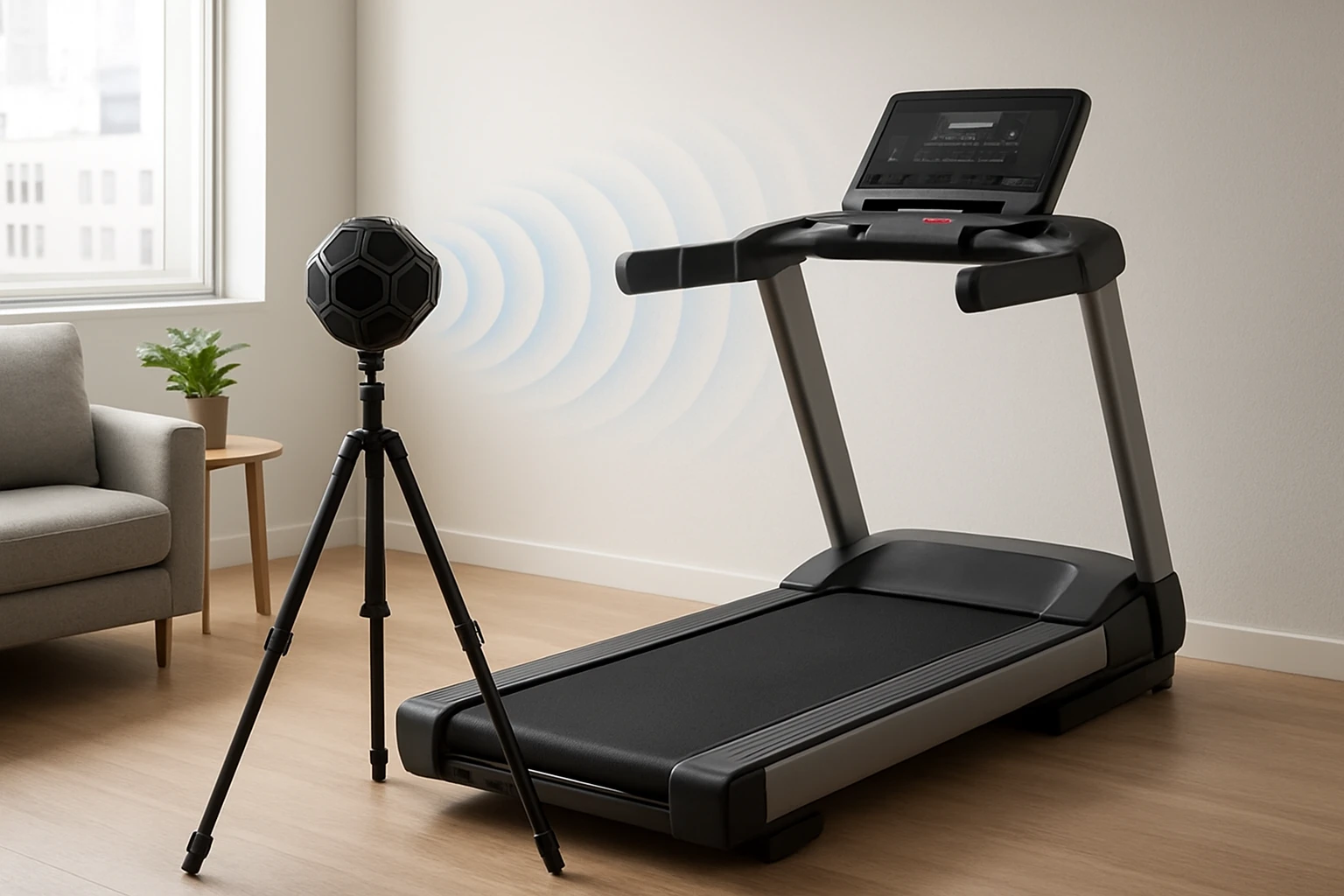
How to Use Acoustic Mapping to Pinpoint and Reduce Treadmill Noise in Your Apartment
Introduction
The modern apartment dweller often faces the challenge of exercising without disturbing neighbors. This guide explains how to employ acoustic mapping techniques to identify the exact sources of treadmill noise and then apply targeted solutions. Readers will learn how to measure baseline sound levels, create a visual noise map, and select appropriate floor‑protection products. By following the steps, one can enjoy a quieter workout while maintaining good relationships with building occupants.
What You’ll Need
- A smartphone or tablet equipped with a sound‑level meter app (many free options are available).
- A laptop or tablet for visualizing acoustic data (Excel, Google Sheets, or dedicated mapping software).
- Measuring tape or laser distance measurer.
- Floor‑protection mat such as THAILE Treadmill Mat (price $21.59, rating 4.5/5).
- Additional non‑slip mat like HAPBEAR Exercise Mat (price $21.99, rating 4.5/5).
- If a larger, heavy‑impact solution is required, consider the Marcy Fitness Equipment Mat (price $29.99, rating 4.6/5).
- Optional: the SereneLife Folding Treadmill (price $195.90, rating 4.2/5) if a new treadmill is being purchased for the space.
Step 1: Prepare the Space
Before any measurements are taken, clear the workout area of clutter that could reflect sound. Ensure that the treadmill is positioned on a level surface, ideally near a wall that can act as a natural sound barrier. Use a measuring tape to record the distance from the treadmill to the nearest walls, windows, and doors; this data will assist in correlating noise levels with physical locations later in the process.
At this stage, placing a floor‑protection mat under the treadmill can already reduce vibration transmission. The THAILE Treadmill Mat offers heavy‑duty PVC construction, is waterproof, and measures 55" x 24"—a size that fits most compact treadmills. Its non‑slip texture prevents the machine from shifting, which can otherwise amplify impact noise.
Step 2: Capture Baseline Noise
Install a reliable sound‑level meter app on the smartphone and calibrate it according to the manufacturer’s instructions. Position the device at ear level, approximately three feet from the treadmill, and record the decibel (dB) level while the treadmill runs at a low speed (1 mph). Note the reading as the baseline for quiet operation.
Increase the speed incrementally (2 mph, 3 mph, up to the maximum intended workout speed) and record each level. This series of measurements creates a reference chart that illustrates how speed influences noise output. If the treadmill is the SereneLife Folding Treadmill, its 3‑inch LCD displays speed, time, and calories, allowing the user to synchronize the recorded data with the displayed settings for precise documentation.
Step 3: Create an Acoustic Map
Transfer the recorded dB values into a spreadsheet, assigning each speed to a column and each measurement location (front, side, rear) to a row. Use conditional formatting to color‑code higher decibel values in red and lower values in green; this visual map quickly highlights hotspots where vibrations are strongest.
For a more sophisticated representation, export the data to a free acoustic‑mapping tool such as Room EQ Wizard. Input the coordinates of the measurement points and generate a heat map that overlays the treadmill footprint. The map will reveal whether the majority of noise originates from the motor housing, the belt, or the floor interface.
Step 4: Apply Vibration Dampening Materials
Based on the acoustic map, select the appropriate mat to address the identified hotspots. If the map shows concentrated vibration at the treadmill’s rear rollers, a thicker, high‑impact mat like the Marcy Fitness Equipment Mat is advisable. This mat features 1/4‑inch EVA foam that absorbs impact and reduces noise transmission, making it ideal for heavier machines or for users who prefer higher incline settings.
For lighter, portable equipment, the HAPBEAR Exercise Mat provides a dual‑sided non‑slip surface and high‑density PVC construction. Its foldable design (68" x 24" when unfolded) allows easy storage when the treadmill is not in use, while still delivering 87% noise reduction according to the manufacturer’s claims.
Place the chosen mat directly beneath the treadmill, ensuring full coverage of the belt’s travel path. If multiple mats are needed to cover a larger area, overlap them slightly to avoid gaps where vibrations could escape.
Step 5: Optimize Treadmill Settings
After installing the mat, repeat the noise measurement process described in Step 2. Compare the new decibel readings with the baseline; a reduction of 3–5 dB is typical when a quality mat is used. If the treadmill still generates excessive noise, adjust the manual incline to a lower level, as higher inclines increase motor load and consequently vibration.
Many modern treadmills, including the SereneLife Folding Treadmill, offer Bluetooth connectivity to sync with fitness apps. Using the app to control speed and incline can produce smoother transitions than manual adjustments, thereby reducing abrupt motor strain that contributes to noise.
Step 6: Verify and Fine‑Tune
Conduct a final acoustic mapping session after all modifications are complete. Record the dB levels at the same speeds and locations as before, then generate a new heat map. The visual comparison should demonstrate a noticeable shrinkage of red‑colored hotspots.
If isolated pockets of noise remain, consider adding a thin rubber strip along the treadmill’s side rails. This inexpensive addition can dampen side‑wall resonance without interfering with belt movement.
Tips & Pro Tips
- Perform measurements at the same time of day to avoid background noise variations caused by traffic or building HVAC systems.
- Use a calibrated external microphone for more accurate readings if the smartphone app appears inconsistent.
- When using the THAILE Treadmill Mat, allow the material to air out for 24 hours to eliminate any residual chemical odor before placement.
- For apartments with thin flooring, combine a high‑impact mat with a thin layer of acoustic foam beneath it for maximal vibration isolation.
- Regularly tighten the treadmill’s bolts and check the belt tension; loose components can generate additional rattling that defeats mat‑based solutions.
Troubleshooting
Problem: Noise persists despite mat installation.
Solution: Verify that the mat fully covers the belt’s travel area; gaps allow vibrations to reach the floor. If the mat is correctly positioned, examine the treadmill’s motor housing for loose screws and tighten them. In extreme cases, consider a professional service to inspect the belt alignment.
Problem: Mat shifts during intense workouts.
Solution: Ensure the mat’s non‑slip surface is clean and free of dust. Adding a thin strip of double‑sided carpet tape underneath can improve adhesion without damaging the flooring.
Conclusion
Acoustic mapping provides a data‑driven method to locate and mitigate treadmill noise in an apartment setting. By measuring baseline sound levels, visualizing hotspots, and applying targeted floor‑protection mats, one can achieve a quieter workout environment. The recommended products—THAILE Treadmill Mat, HAPBEAR Exercise Mat, Marcy Fitness Equipment Mat, and the SereneLife Folding Treadmill—offer practical solutions that balance cost, durability, and performance. Implement the steps outlined in this guide, and the apartment will become a more harmonious space for both exercise and daily living.
Products Mentioned in This Guide
Frequently Asked Questions
What is acoustic mapping and how does it help reduce treadmill noise?
Acoustic mapping records sound levels at multiple points to create a visual map of noise sources, allowing you to target the exact spots where the treadmill vibrates most.
Which smartphone app is best for measuring baseline treadmill sound levels?
Any free sound‑level meter app works, but popular choices include Decibel X and SPL Meter for quick, reliable readings.
How do I create a noise map using Excel or Google Sheets?
Record decibel readings at several locations around the treadmill, enter them into a spreadsheet, and use a heat‑map or conditional‑formatting chart to visualize the loudest areas.
What type of floor‑protection mat is most effective for apartment treadmill use?
A dense, anti‑vibration mat like the THAILE Treadmill Mat (4.5‑star rating) absorbs impact and significantly lowers transmitted noise.
Can additional non‑slip mats improve noise reduction beyond a primary treadmill mat?
Yes, layering a non‑slip mat under the primary mat adds extra cushioning and prevents movement, further diminishing vibrations and sound.