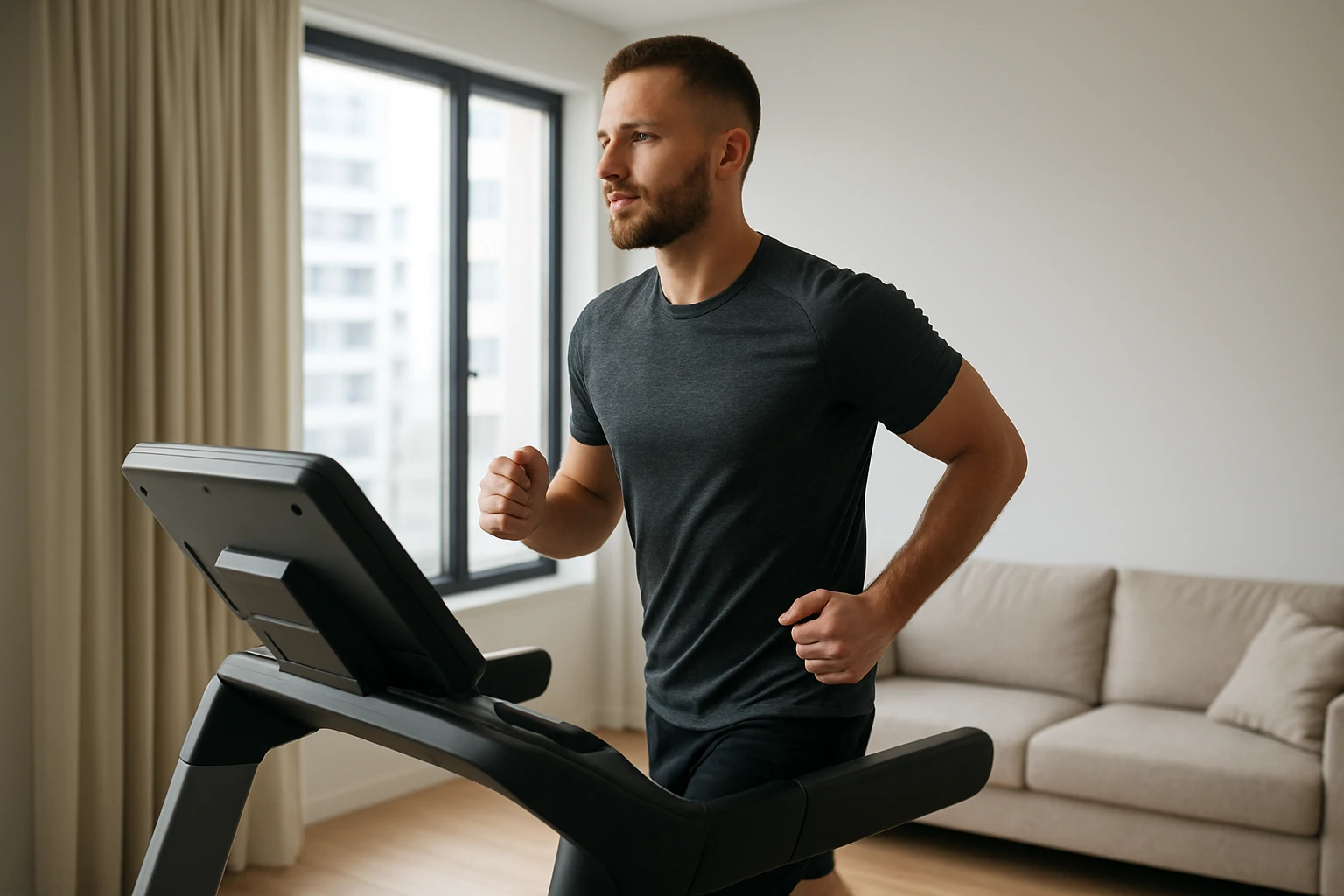
Ultimate Apartment Treadmill Training Guide: Master Stride and Cadence for Faster, Quieter Runs
Introduction
Living in an apartment does not have to limit one’s ability to train for faster runs. This guide explains how to master stride length, cadence, and noise control while using a treadmill that fits into limited square footage. Readers will learn foundational biomechanics, how to select a treadmill that balances performance with quiet operation, and actionable tips for maintaining optimal form. By the end of the article, one will be equipped to run faster, quieter, and more efficiently without disturbing neighbors.
Background and Context
Stride and cadence are the two primary variables that determine running speed. Stride length refers to the distance covered with each footfall, while cadence measures the number of steps taken per minute. In a confined apartment setting, increasing stride length excessively can lead to balance issues, making cadence the safer lever for speed gains. Understanding these concepts allows an individual to tailor treadmill settings—such as speed, incline, and belt tension—to achieve desired performance outcomes.
Noise is another critical factor for indoor runners. Traditional treadmills often generate sound levels above 55 dB, which can disrupt co‑habitants and affect concentration. Modern under‑desk and compact models incorporate brushless motors and sound‑dampening technology, reducing noise to below 45 dB. Selecting a quiet treadmill therefore supports both personal training goals and respectful shared living.
Understanding Stride and Cadence
Effective stride management begins with a baseline assessment. One should record the natural cadence while walking on a flat surface, typically ranging from 150 to 170 steps per minute for most adults. For running, elite athletes often exceed 180 steps per minute, but apartment runners can target 170–180 steps per minute to improve speed without overstriding.
To increase cadence, the treadmill speed can be adjusted while maintaining a comfortable stride length. For example, a user who normally runs at 5.5 mph with a cadence of 165 spm can raise the speed to 6.0 mph, which naturally raises cadence to around 175 spm. The key is to avoid a sudden jump that forces the body to overextend; incremental changes of 0.2–0.3 mph are recommended.
Incline plays a supportive role by engaging posterior chain muscles, allowing a runner to maintain a higher cadence at a lower perceived effort. A modest 2–4% incline can increase calorie burn by up to 15% while preserving joint health. When space permits, a treadmill with adjustable incline provides a versatile tool for cadence training.
Product Recommendation
For apartment dwellers seeking an incline-capable, space‑saving solution, the Viamotion Compact Under Desk Treadmill offers a 4‑degree adjustable incline, a quiet 45 dB brushless motor, and a speed range of 0.6–3.8 mph. Its LED display provides real‑time speed feedback, enabling precise cadence adjustments. With a rating of 4.5/5 from 716 reviews and a price of $109.99, it balances affordability with functional features.
Choosing the Right Treadmill for Apartments
When selecting a treadmill for an apartment, three criteria dominate the decision process: footprint, noise level, and feature set. Footprint determines whether the machine can be stored upright against a wall or folded beneath a bed. Noise level influences neighbor satisfaction and personal focus during video calls or nighttime workouts. Feature set—such as incline, speed range, and connectivity—affects training versatility.
The market offers a spectrum from ultra‑compact walking pads to full‑size running decks. Compact walking pads excel in storage but typically cap at 3.8 mph, making them ideal for walking or light jogging. Full‑size treadmills provide higher speed ranges and larger decks, supporting serious runners but requiring more space and often louder operation.
Below is a concise comparison of four highly rated models that meet the apartment criteria. Each entry includes dimensions, noise specifications, speed ranges, and price points, allowing readers to match a treadmill to their living situation and training goals.
Comparison/Selection Guide
| Model | Footprint (L×W) | Speed Range | Incline | Noise Level | Price | Rating |
|---|---|---|---|---|---|---|
| Viamotion Compact Under Desk Treadmill | ~0.5 m² (foldable) | 0.6–3.8 mph | 4° adjustable | 45 dB | $109.99 | 4.5/5 |
| NordicTrack T Series | ~1.2 m² (foldable) | 0–10 mph | 0–10 % | ~55 dB | $799.00 | 4.3/5 |
| MCRG Walking Pad | ~0.4 m² (foldable) | 0.6–7.6 mph | none | ~48 dB | $99.99 | 4.2/5 |
| FOUSAE Walking Pad | ~0.45 m² (foldable) | 0.6–6.2 mph | 10 % built‑in | ~40 dB | $159.99 | 4.8/5 |
Optimizing Speed and Incline for Quiet Runs
Speed selection should align with the desired cadence rather than arbitrary mileage goals. A runner aiming for 175 spm at a moderate effort may find a speed of 6.5 mph sufficient on a treadmill with a 2% incline. The incline reduces impact forces, allowing a smoother stride and quieter belt operation because the motor does not need to accelerate as rapidly.
When using a treadmill with a built‑in incline, adjust the slope in one‑second increments to avoid abrupt changes that can generate additional noise. The FOUSAE Walking Pad offers a 10% incline that can be altered instantly, providing a practical way to simulate hill training without increasing belt speed.
For users who prefer a traditional running deck, the NordicTrack T Series supplies a 0–10% incline range and a speed ceiling of 10 mph, making it suitable for interval training while still offering a relatively quiet operation thanks to its KeyFlex cushioning system.
Noise Management and Quiet Running Techniques
Beyond equipment selection, runners can adopt techniques that further reduce noise. Placing a rubber mat beneath the treadmill absorbs vibrations and lowers the transmitted sound to the floor. Additionally, wearing shoes with soft midsoles diminishes impact noise on the belt.
Running at a consistent speed rather than frequent acceleration and deceleration reduces motor strain and acoustic output. When using a walking pad, maintain a steady pace within the 0.6–3.8 mph range for the Viamotion model, as rapid speed changes can cause the brushless motor to emit higher frequencies.
Finally, schedule high‑intensity sessions during daytime hours when ambient noise levels are higher, thereby minimizing perceived disturbance. Quiet operation is not solely a hardware attribute; user behavior plays a decisive role.
Integrating Technology and Tracking
Modern treadmills integrate with smartphones, tablets, and fitness platforms to provide real‑time analytics. The NordicTrack T Series includes a 5" LCD display and a device shelf for iFIT streaming, allowing users to follow trainer‑led workouts while the treadmill automatically adjusts speed and incline.
For compact models lacking a built‑in screen, the Viamotion treadmill offers an LED display that shows speed, distance, time, and calories. Pairing this data with a fitness app on a phone enables detailed cadence analysis, helping runners fine‑tune their step frequency.
When privacy is a concern, the MCRG Walking Pad provides a detachable handle that can be removed for a sleek under‑desk setup, allowing the user to place a laptop or tablet on the adjacent desk without obstructing the belt. This flexibility supports remote work scenarios where multitasking is essential.
Maintenance and Longevity
Regular maintenance ensures a treadmill remains quiet and reliable. Lubricating the belt according to the manufacturer’s schedule—typically every 150 miles—prevents friction that can increase noise. For brushless motors, such as those in the Viamotion and FOUSAE models, oil‑free operation reduces the need for frequent servicing.
Inspect the belt tension monthly; a belt that is too tight can cause excessive wear on rollers and elevate sound levels. Adjust the tension using the rear rollers, following the instructions provided in the user manual. The Viamotion includes a one‑year motor warranty, reflecting confidence in its durability.
Store folding treadmills in a dry environment to avoid moisture damage to electronic components. When folding, ensure the foot bar is secured to prevent accidental collapse during storage. Proper care extends the lifespan of the equipment, delivering consistent performance for years.
Best Practices & Tips
- Start each session with a 5‑minute warm‑up at a low cadence to prepare joints for higher impact.
- Use a metronome app set to 170–180 beats per minute to maintain target cadence during runs.
- Gradually increase speed by 0.2 mph each week while monitoring stride length to avoid overstriding.
- Incorporate 1‑minute incline bursts (2–4%) every 5 minutes to boost calorie burn without raising noise.
- Place a high‑density rubber mat beneath the treadmill to dampen vibrations and protect flooring.
- Schedule interval training during daylight hours to minimize neighbor disturbance.
- Track progress with a fitness app that logs cadence, distance, and heart rate for data‑driven adjustments.
Frequently Asked Questions
- Can I run at a full sprint on a compact walking pad? Most walking pads, including the Viamotion and MCRG models, cap speed at 3.8–7.6 mph, which is insufficient for sprinting. For sprint work, a full‑size treadmill such as the NordicTrack T Series is recommended.
- How loud is a treadmill that operates at 45 dB? A sound level of 45 dB is comparable to a quiet library. This level is generally acceptable for apartment living, especially during daytime hours.
- Do I need a subscription to use the iFIT features on the NordicTrack? iFIT functionality requires a membership, but the treadmill can be operated in manual mode without any subscription.
- Is the 10% incline on the FOUSAE Walking Pad motor‑driven? Yes, the incline adjusts electronically in one‑second increments, eliminating manual screw adjustments and maintaining quiet operation.
- What is the maximum user weight for each model? Viamotion supports up to 265 lbs, NordicTrack up to 300 lbs, MCRG up to 350 lbs, and FOUSAE also up to 350 lbs.
- Can I use a treadmill while working from a standing desk? The Viamotion Compact Under Desk Treadmill is specifically designed for under‑desk use, featuring a handle bar and remote control for seamless multitasking.
- How often should I lubricate the belt? Manufacturers typically recommend lubrication every 150 miles or approximately every three months for regular users.
Conclusion
Mastering stride and cadence within an apartment environment is achievable through informed equipment choices, precise speed and incline adjustments, and disciplined training habits. By selecting a treadmill that aligns with space constraints and noise tolerance—such as the Viamotion Compact Under Desk Treadmill for ultra‑compact needs or the NordicTrack T Series for full‑range performance—runners can enjoy faster, quieter runs without compromising comfort.
Applying the best‑practice tips, maintaining the equipment, and leveraging technology for real‑time feedback will accelerate progress toward personal fitness goals. Whether one is a remote worker seeking gentle movement or an aspiring runner targeting a new PR, the strategies outlined in this guide provide a solid foundation for success.
Products Featured in This Guide
Viamotion Compact Under Desk Treadmill
Price: $109.99 | Rating: 4.5/5 (716 reviews)
Featured for its ultra‑compact footprint, 4° adjustable incline, and ultra‑quiet 45 dB brushless motor, making it ideal for under‑desk training and cadence work.
NordicTrack T Series
Price: $799.00 | Rating: 4.3/5 (33,085 reviews)
Featured for its 0–10% incline, 0–10 mph speed range, 5" LCD display, and iFIT compatibility, providing a full‑range training platform for serious runners.
MCRG Walking Pad
Price: $99.99 | Rating: 4.2/5 (1,275 reviews)
Featured for its 0.6–7.6 mph speed range, 3.0 HP motor, and detachable handle, offering versatility for both walking and light jogging in tight spaces.
FOUSAE Walking Pad
Price: $159.99 | Rating: 4.8/5 (384 reviews)
Featured for its 10% electronic incline, ultra‑quiet 40 dB operation, and 12 built‑in HIIT programs, delivering a high‑intensity option without sacrificing space.