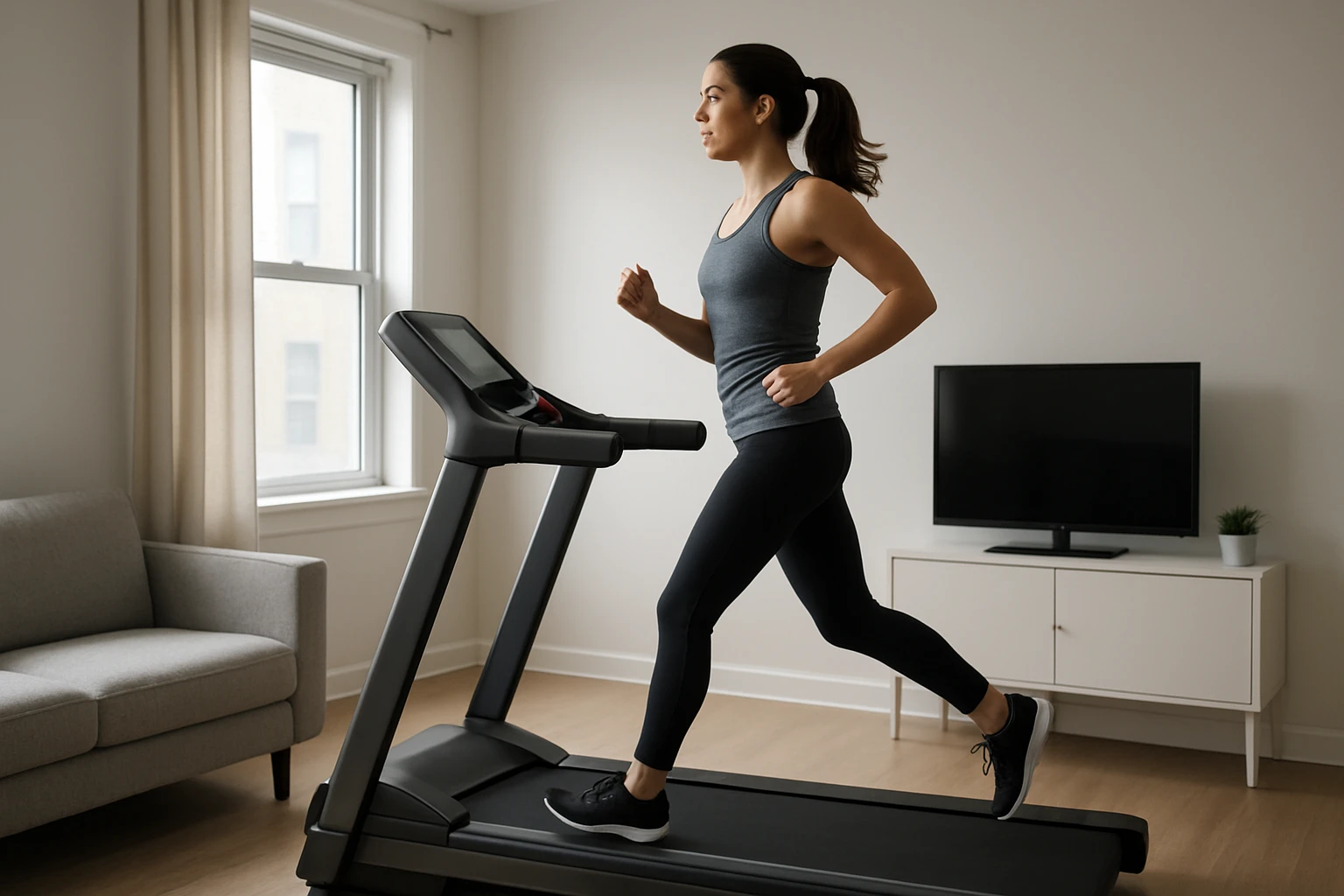
How to Train for a 5K in 4 Weeks on a Treadmill in a Small Apartment
This guide explains how a resident of a modest living space can prepare for a 5K race within a single month using a treadmill. It outlines the essential equipment, a structured four‑week program, and practical advice to maximise results while respecting limited floor area. The reader will learn how to select a suitable treadmill, organise a weekly schedule, and apply proven training techniques without needing a full‑size gym. By following these steps one can achieve a race‑ready condition without sacrificing living‑room space.
What You'll Need
- A compact treadmill that folds for storage (see product recommendations below).
- Basic workout attire, supportive shoes, and a water bottle.
- A smartphone or tablet for tracking distance, speed, and heart rate.
- A small space of at least 5' x 3' cleared of obstacles.
Step 1: Assess Current Fitness Level and Set a Realistic Goal
Begin by measuring how far one can comfortably run on a treadmill without stopping. Use the built‑in distance readout to record the result, then compare it to the 3.1‑mile distance of a 5K. If the baseline is less than one mile, the four‑week plan will focus on gradually extending endurance. Establish a target finish time that reflects personal ability, such as completing the 5K in under 35 minutes.
Step 2: Choose the Right Treadmill for a Small Apartment
Space efficiency is paramount in a compact dwelling. The SereneLife Folding Treadmill offers a hydraulic folding mechanism that reduces the footprint to 21.65" L x 24.4" W x 46.4" H when stored. Priced at $229.90 and rated 4.2 stars by over eleven thousand reviewers, it provides a 15.7" x 39.3" running belt, manual incline, and Bluetooth connectivity for app integration. This model is ideal for users who need a treadmill that can be tucked into a closet after each session.
For those who prefer a treadmill that can double as a desk companion, the Acezoe 2-in-1 Walking Pad folds to a height of 5.3" and weighs only 51 lb, making it effortless to slide under a sofa or desk. At $168.28 with a 4.5‑star rating, it includes a 10% manual incline and a quiet 2.5 HP motor, allowing seamless transition between walking while working and more vigorous treadmill sessions.
Both machines include safety keys, anti‑slip belts, and shock‑absorbing layers that protect joints during repeated runs. Selecting either model ensures that the training environment remains safe, quiet, and unobtrusive for roommates or family members.
Step 3: Create a Weekly Training Schedule
Structure the month into four blocks, each consisting of three treadmill workouts and two rest or cross‑training days. The schedule should follow a progressive overload principle, increasing either duration or intensity each week.
- Monday – Easy run (30 minutes at a conversational pace).
- Wednesday – Interval session (5 × 3‑minute fast intervals with 2‑minute recovery).
- Friday – Long run (start at 40 minutes, add five minutes each week).
- Tuesday and Thursday – Light activity such as yoga, cycling, or brisk walking.
- Weekend – Rest or optional low‑impact activity.
This routine balances cardio stress with recovery, which is essential for avoiding injury in a confined space where over‑training can quickly lead to fatigue.
Step 4: Warm‑up and Cool‑down Routines
Each session must begin with a five‑minute warm‑up at 2.5–3 mph to raise core temperature and lubricate joints. Follow the warm‑up with dynamic stretches such as leg swings, hip circles, and ankle rolls. After the main workout, allocate five minutes to a gradual cool‑down, lowering speed to a walk and finishing with static stretches for the calves, hamstrings, and quadriceps. Consistent warm‑up and cool‑down reduce the likelihood of muscle strains, especially on a treadmill with a narrower belt.
Step 5: Execute Interval Training for Speed Development
Intervals improve cardiovascular efficiency and teach the body to tolerate higher speeds for short periods. On the SereneLife Folding Treadmill set the speed to 5–6 mph for three minutes, then reduce to 3 mph for two minutes of active recovery. Repeat this cycle five times, aiming to maintain form throughout. The treadmill’s 3‑inch LCD display shows speed, time, distance, heart rate, and calories, allowing precise monitoring of each interval.
For users of the Acezoe Walking Pad, intervals can be performed at 4–5 mph during the “running” mode, while the incline remains at 0% to keep noise low. The remote control permits quick speed adjustments without breaking stride.
Step 6: Incorporate Incline Workouts for Strength and Calorie Burn
Incline training simulates hill climbing, engages glutes and calves, and raises heart‑rate without increasing speed. The SereneLife model provides four manual incline levels; begin with level 1 (approximately 2% grade) during the long run and progress to level 3 by week four. The Acezoe Walking Pad offers a 10% manual incline, which can be employed for short 5‑minute hill bursts within an interval session, thereby boosting calorie expenditure by up to 60% according to the manufacturer.
When using incline, maintain a shorter stride and a slightly higher cadence to preserve balance on the narrower belt. This adjustment protects knees and improves overall running economy.
Step 7: Track Progress with Apps and Data Analysis
Both recommended treadmills support Bluetooth connectivity. Pair the device with a free fitness app such as Strava or the built‑in Kinomap platform to log distance, pace, and heart‑rate trends. Reviewing weekly data helps identify plateaus and adjust intensity accordingly. The SereneLife treadmill’s app sync feature also records session duration, allowing one to compare actual mileage against the training plan.
Set achievable micro‑goals each week, such as increasing total weekly mileage by 10% or shaving five seconds off average pace. Celebrate these milestones to maintain motivation throughout the four‑week cycle.
Tips & Pro Tips
- Place the treadmill on a rubber mat to minimise vibration and protect flooring.
- Keep a small fan nearby to improve air circulation without raising ambient temperature.
- Hydrate before, during, and after each session; a 500 ml water bottle is sufficient for most indoor runs.
- Wear moisture‑wicking clothing to stay comfortable during longer sessions.
- If the treadmill belt feels noisy, lubricate it according to the manufacturer’s instructions to ensure smooth operation.
- Schedule a “dress‑rehearsal” run at the same time of day as the target race to adapt to anticipated conditions.
Troubleshooting
Problem: Belt slipping during high‑speed intervals.
Solution: Tighten the belt tension screws by a quarter‑turn, then re‑align the belt using the adjustment knobs provided on the rear roller.
Problem: Motor makes a grinding noise after several weeks of use.
Solution: Verify that the treadmill is placed on a level surface; uneven flooring can cause motor strain. If the noise persists, contact the manufacturer's warranty service.
Problem: Bluetooth connection drops frequently.
Solution: Keep the controlling device within three meters of the treadmill and avoid interference from other wireless peripherals.
Conclusion
By selecting a space‑saving treadmill, following a progressive four‑week schedule, and integrating interval and incline work, an apartment resident can successfully train for a 5K race. The plan balances intensity with recovery, leverages technology for tracking, and respects the constraints of limited living space. Consistent execution of these steps will result in improved endurance, faster pace, and confidence on race day.
Products Mentioned in This Guide
Frequently Asked Questions
What type of treadmill is best for a small apartment?
A compact, fold‑able treadmill with a modest belt length and low profile is ideal for limited spaces.
How much floor space is required to set up a treadmill for 5K training?
A clear area of about 5 ft × 3 ft is sufficient for most fold‑able models.
How should I structure my 4‑week treadmill training schedule?
Follow a progressive plan that alternates easy runs, interval sessions, and a longer run each week, increasing total mileage by 10‑15% weekly.
What gear do I need besides the treadmill for 5K training?
Supportive running shoes, breathable workout attire, a water bottle, and a device to track distance, speed, and heart rate.
How can I track my progress and stay motivated while training at home?
Use a smartphone or tablet app to log runs, set weekly goals, and celebrate milestones such as distance or speed improvements.