How to Pack and Ship a Folding Treadmill Safely: Step‑by‑Step Packing Guide, Materials, and Shipping Tips
Introduction
Transporting a folding treadmill can appear daunting, yet with a systematic approach the process becomes straightforward and risk‑free. This guide explains every phase of the relocation, from initial preparation to final carrier selection, and demonstrates how to protect the machine against damage during transit. By following the instructions, readers will avoid common pitfalls such as scratched frames, bent motors, or delayed shipments. The information is valuable for homeowners, office managers, and fitness‑facility operators who need to move equipment without compromising performance or warranty.
What You’ll Need
- Heavy‑duty moving blankets or foam padding
- Stretch wrap (plastic film)
- Ratchet straps or heavy‑duty tie‑down belts
- Phillips and flat‑head screwdrivers
- Adjustable wrench set
- Cardboard corner protectors
- Custom‑size wooden crate or reinforced cardboard box
- Label maker or permanent marker
- Insurance documentation (optional but recommended)
While many of these items can be sourced from a local hardware store, certain products listed later can streamline the workflow and provide added security.
Step‑by‑Step Instructions
Step 1 – Power Down and Unplug the Treadmill
Begin by turning off the treadmill, disconnecting the power cord, and removing any attached devices such as tablets or heart‑rate monitors. This eliminates the risk of electrical short circuits during handling. For models with built‑in batteries, consult the user manual to deactivate the power source. If you own a Trisomy Foldable Treadmill, the folding mechanism allows you to collapse the deck with a single lever, reducing the overall footprint to just 4.48 inches when folded. The compact size simplifies the subsequent wrapping stage and minimizes the amount of protective material required.
Step 2 – Remove Removable Components
Detach handrails, console panels, and any accessory trays using the appropriate screwdriver. Place screws and small hardware in a zip‑lock bag labeled for easy reassembly. The Sunny Health Smart Treadmill features a quick‑release console that can be removed without tools, which speeds up this step considerably. Removing these parts prevents them from shifting inside the crate, thereby protecting delicate wiring and display screens.
Step 3 – Clean the Surface and Inspect for Damage
A clean surface ensures that protective blankets adhere properly. Wipe the frame, belt, and deck with a dry microfiber cloth. Inspect the motor housing, belt tension, and shock‑absorption pads for any pre‑existing wear. Document any concerns with photographs; this documentation is useful if you need to file an insurance claim after shipping.
Step 4 – Wrap the Treadmill with Protective Blankets
Lay a heavy‑duty moving blanket on the floor, then gently roll the treadmill onto it. Secure the blanket with stretch wrap, overlapping each layer by at least 4 inches to create a continuous barrier. For high‑value machines such as the NordicTrack T Series, consider adding an extra foam pad around the motor housing because the 3.5 HP brushless motor is sensitive to vibration. The blanket protects against scratches, while the stretch wrap prevents dust and moisture from reaching the frame.
Step 5 – Secure the Wrapped Treadmill with Straps
Place two ratchet straps across the top and middle of the wrapped treadmill, tightening them until the blanket is snug but not overly compressed. Over‑tightening can deform the deck; aim for a firm hold that eliminates movement. The FOUSAE 5‑in‑1 Foldable Treadmill includes reinforced side rails that respond well to strap tension, ensuring the unit remains stable within the crate.
Step 6 – Choose the Appropriate Crate or Box
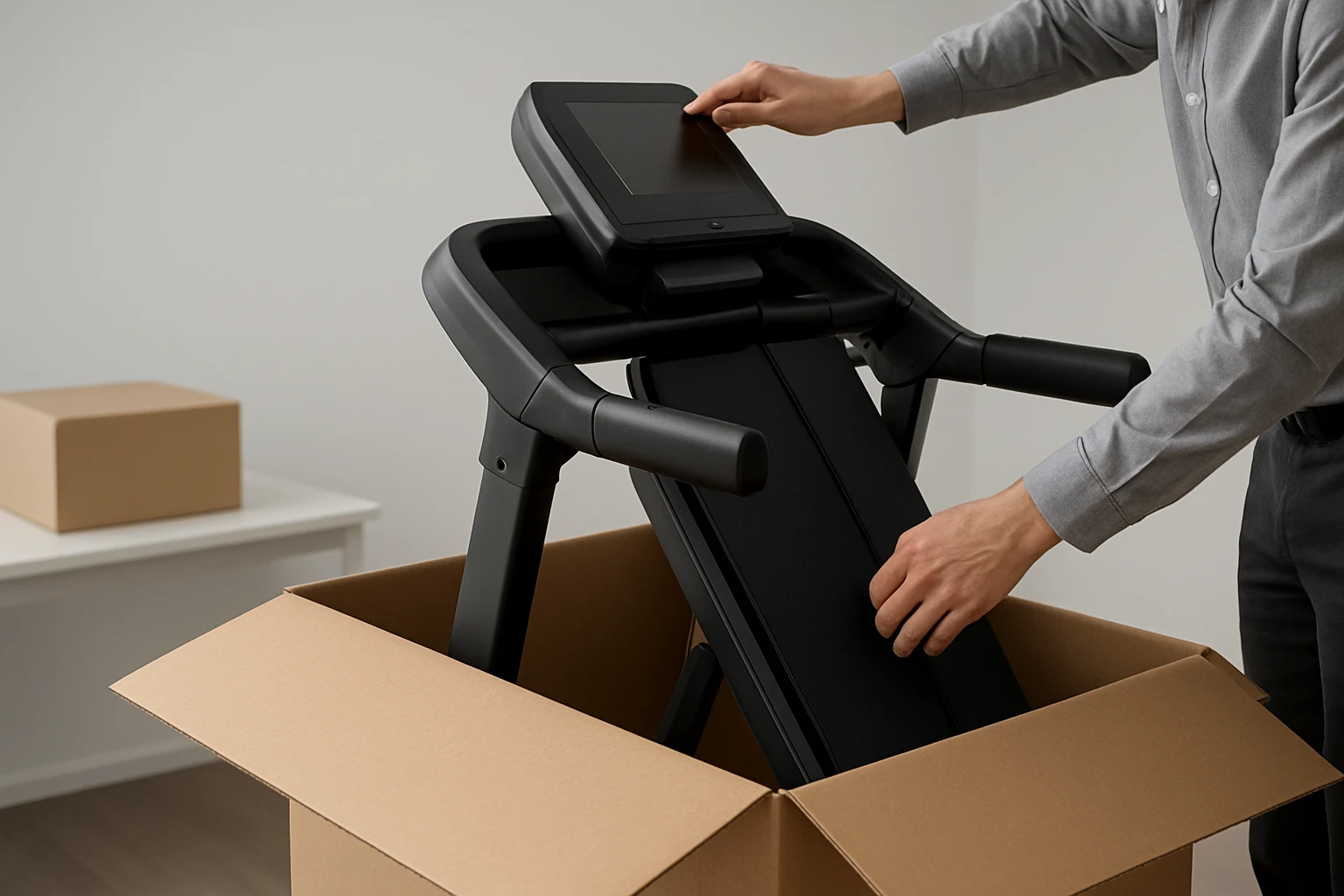
Small to medium foldable treadmills (up to 250 lb) can be placed in a reinforced double‑wall cardboard box sized 48" × 24" × 30". Larger models such as the NordicTrack T Series often require a custom wooden crate with interior bracing to support the 300 lb capacity. Insert cardboard corner protectors at each edge to absorb impact. Fill any voids with packing peanuts or crumpled paper to prevent shifting during transit.
Step 7 – Label the Package Clearly
Affix a bold “FRAGILE – THIS SIDE UP” label on each side of the crate. Include the destination address, a contact phone number, and a handling instruction such as “Do Not Stack”. If the treadmill is being shipped internationally, add a customs declaration indicating the item’s value and HS code (typically 9506.91). Accurate labeling reduces the likelihood of mishandling by carrier staff.
Step 8 – Select a Shipping Carrier and Purchase Insurance
Compare rates from major carriers (UPS, FedEx, DHL) and choose a service that offers “lift‑gate” pickup if the crate exceeds 150 lb. Insure the shipment for at least 150 % of the retail price; for example, the Trisomy Foldable Treadmill retails for $139.99, so coverage of $210 is advisable. Retain the tracking number and monitor the shipment daily.
Tips & Pro Tips
- Distribute weight evenly: When loading the crate onto a pallet, place the heaviest side down first to maintain balance.
- Use a pallet jack: For crates over 200 lb, a pallet jack reduces strain and prevents accidental drops.
- Temperature considerations: Store the packaged treadmill in a climate‑controlled environment; extreme cold can make plastic components brittle.
- Document serial numbers: Write the treadmill’s serial number on the outside of the crate; this assists with warranty claims if damage occurs.
- Test reassembly before use: Once the treadmill arrives, re‑attach all components and perform a brief power‑on test before a full workout.
Troubleshooting
Problem: The deck appears warped after unpacking.
Solution: Allow the treadmill to sit upright for 24 hours to let any residual moisture evaporate. Then check belt tension and re‑level the deck using the adjustment bolts.
Problem: The motor makes unusual noises.
Solution: Verify that the protective blankets were removed fully and that no debris is trapped under the motor housing. If the noise persists, contact the manufacturer’s support line.
Conclusion
Packing and shipping a folding treadmill safely involves careful preparation, proper protective materials, and the right crate or box. By following the eight detailed steps, using recommended tools, and applying the pro tips, users can minimize the risk of damage and ensure a smooth delivery experience. Whether moving a compact Trisomy Foldable Treadmill or a larger NordicTrack T Series, the principles remain the same: protect, secure, label, and ship with confidence.
Products Mentioned in This Guide
Frequently Asked Questions
What materials are essential for safely packing a folding treadmill?
Heavy‑duty moving blankets, stretch wrap, ratchet straps, cardboard corner protectors, and a custom‑size wooden crate or reinforced cardboard box are recommended.
How should I disassemble a folding treadmill before shipping?
Remove the console, fold the deck, detach the handrails, and secure all bolts with a screwdriver and wrench before wrapping each component.
What is the best way to protect the treadmill frame and motor during transit?
Wrap the frame and motor in moving blankets or foam padding, then secure with stretch wrap and tie‑down straps to prevent shifting.
Should I use a custom wooden crate or a reinforced cardboard box?
A custom wooden crate offers superior protection for long distances, while reinforced cardboard is acceptable for short, local moves.
Is shipping insurance necessary for a folding treadmill?
Insurance is recommended to cover potential damage or loss, especially for high‑value or warranty‑protected equipment.