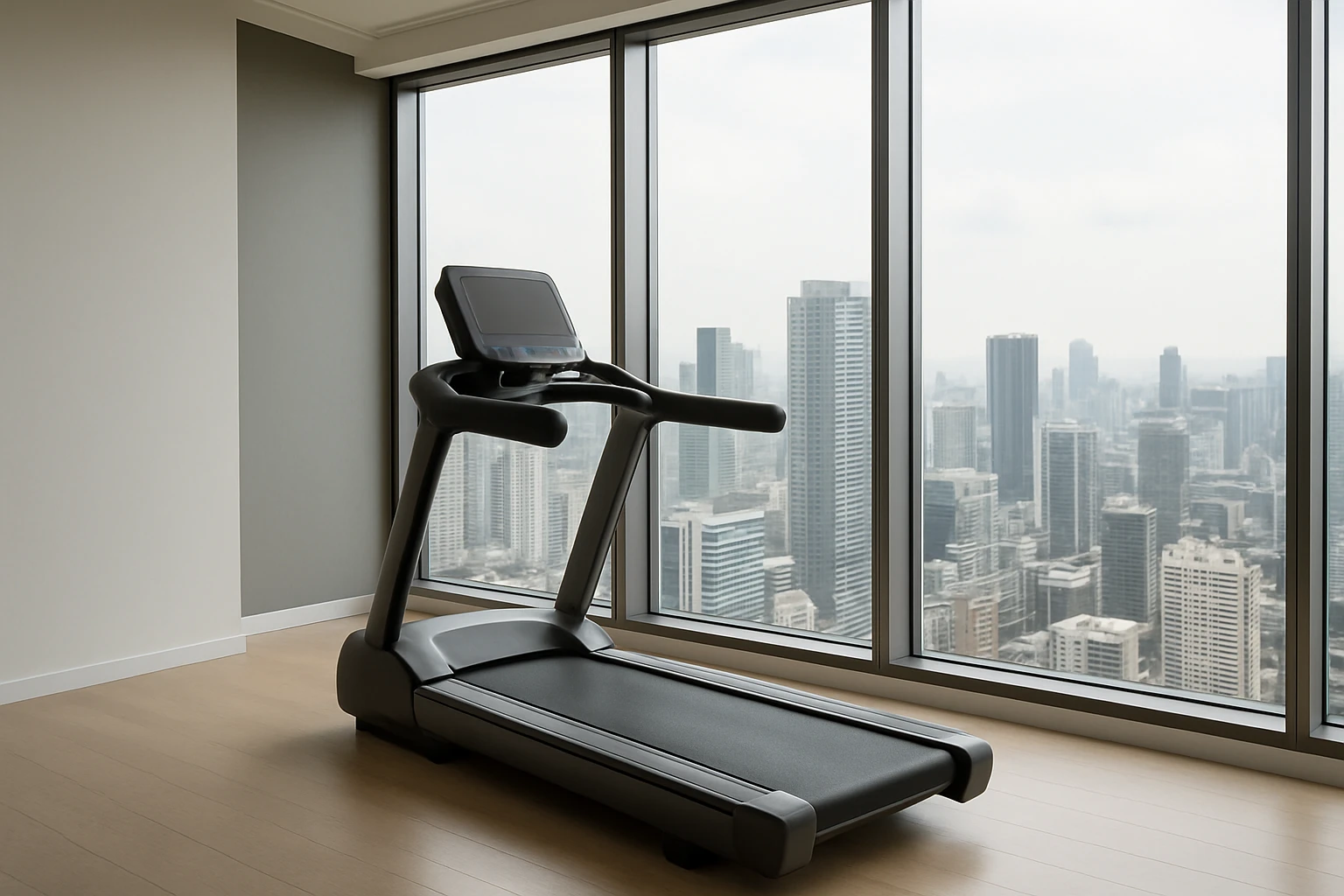
Treadmill Weight Limits in High‑Rise Apartments: Complete Guide to Floor‑Load Safety, Building Rules & Installation Tips
Introduction
This guide explains how residents of high‑rise apartments can select, install, and operate a treadmill without violating structural limits or building policies. Readers will learn about floor‑load calculations, condominium or co‑op regulations, noise mitigation, and practical installation methods. The article also recommends five treadmills that meet the most common weight‑capacity and space requirements for vertical living.
By the end of the guide, one will be able to assess whether a treadmill is feasible for a particular unit, choose a model that aligns with structural constraints, and follow best‑practice steps for safe, quiet operation.
Background and Context
High‑rise buildings are designed to support a specific live‑load per square foot, typically expressed in pounds per square foot (psf). Residential floors often have a design live‑load of 40 psf to 60 psf, which includes occupants, furniture, and equipment. A treadmill that weighs 300 lb and is placed on a 20 sq ft area contributes an additional 15 psf, which may be acceptable if the total does not exceed the design limit.
Many condominium boards and co‑ops also impose rules concerning vibration, noise, and the need for a written approval before installing heavy exercise equipment. Understanding these policies before purchase prevents costly removals or disputes.
In addition to structural considerations, apartment dwellers must address space constraints, floor‑vibration transmission, and the potential impact on neighboring units. Selecting a treadmill with built‑in shock‑absorption and a compact footprint mitigates many of these concerns.
Key Considerations for Treadmill Use in High‑Rise Apartments
1. Floor‑Load Capacity
- Calculate the treadmill’s weight‑to‑area ratio: Weight (lb) ÷ Footprint (sq ft) = psf impact.
- Compare the result with the building’s stated live‑load capacity. If the building allows 50 psf and the treadmill adds 12 psf, the installation is generally permissible.
- When in doubt, request a structural engineer’s assessment or consult the building management.
2. Vibration and Noise Control
- Choose models with dedicated cushioning systems such as KeyFlex or multi‑layer shock absorption.
- Place a high‑density rubber mat beneath the treadmill to further isolate vibrations.
- Operate the treadmill during reasonable hours to respect neighbors.
3. Space and Folding Mechanisms
- Measure the available floor area, allowing at least 2 ft clearance on each side for safe entry and exit.
- Prefer treadmills that fold vertically or horizontally, reducing the occupied footprint when not in use.
- Consider models with built‑in wheels for easy relocation during cleaning or reconfiguration.
4. Building Approval Process
- Prepare a brief proposal that includes treadmill specifications, weight, footprint, and vibration‑mitigation plan.
- Submit the proposal to the property management or board, attaching any engineering calculations if required.
- Obtain written permission before delivery; many carriers require proof of approval for large items.
Product Recommendations Aligned with Apartment Constraints
The following five treadmills have been selected because they balance weight capacity, cushioning technology, compact design, and price points suitable for high‑rise living.
NordicTrack T Series
NordicTrack T Series offers a maximum speed of 12 mph, an incline range up to 12 %, and dual cushioning options (SelectFlex™ and KeyFlex™). The treadmill weighs approximately 300 lb and folds for storage, making it a strong candidate for apartments with a 20‑sq ft footprint. It holds a 4.2‑star rating from 32,679 reviews, indicating broad customer satisfaction. The price is $799.00.
Key features include a 5" LCD display, device shelf for iFit streaming, and a sturdy frame that distributes weight evenly across the floor.
ApexNexus 3‑in‑1 Folding Treadmill
ApexNexus 3‑in‑1 Folding Treadmill is designed for compact spaces. It supports users up to 300 lb, provides an 8 % manual incline, and features a 3.0 HP brushless motor that operates below 50 dB. The treadmill folds in seconds and includes built‑in wheels for easy relocation. With a 4.2‑star rating from 403 reviews and a price of $189.99, it delivers value for budget‑conscious residents.
The six‑layer cushioning system reduces joint impact, while the LED display with smart memory saves workout data during pauses.
Ateedge Heavy Duty Treadmill
Ateedge Heavy Duty Treadmill accommodates up to 400 lb, features a 3.5 HP motor, and offers an automatic incline up to 18 %. Its extra‑wide 47.24" × 18.90" belt and 5.9‑inch thick deck provide stability for taller users. The treadmill integrates Bluetooth connectivity for app‑based tracking and has a 4.6‑star rating from 15 reviews. The price is $759.99.
Because of its robust steel frame, the treadmill distributes load effectively, which is advantageous in buildings with strict floor‑load limits.
WELLFIT Auto Incline Treadmill
WELLFIT Auto Incline Treadmill provides a 4.5 HP brushless motor, a 15 % auto‑incline, and a 500 lb capacity. The large 55" × 20" running area accommodates long strides, while the 13‑button console simplifies operation. With a 4.7‑star rating from 92 reviews and a price of $759.99, it offers commercial‑grade performance for apartment users willing to invest in a premium model.
Its low‑noise design (under 45 dB) and built‑in pulse sensors make it suitable for shared walls where sound transmission is a concern.
HUAGEED Heavy Duty Treadmill
HUAGEED Heavy Duty Treadmill supports up to 400 lb, includes a 3.5 HP motor, and offers an 18 % auto‑incline. Its 47.24" × 18.90" belt and thickened deck provide a stable platform, while the steel frame ensures even weight distribution. The treadmill holds a 4.3‑star rating from 126 reviews and is priced at $839.99.
Its foldable design and minimal assembly steps are advantageous for residents who need to move the unit occasionally.
Comparison and Selection Guide
| Model | Max User Weight | Motor Power | Incline Range | Footprint (in) | Price | Rating |
|---|---|---|---|---|---|---|
| NordicTrack T Series | 300 lb | Varies (up to 3 HP) | 0‑12 % | 70 × 34 | $799.00 | 4.2/5 (32,679) |
| ApexNexus 3‑in‑1 | 300 lb | 3.0 HP | 0‑8 % (manual) | 55 × 30 (folded) | $189.99 | 4.2/5 (403) |
| Ateedge Heavy Duty | 400 lb | 3.5 HP | 0‑18 % | 60 × 38 | $759.99 | 4.6/5 (15) |
| WELLFIT Auto Incline | 500 lb | 4.5 HP | 0‑15 % | 70 × 36 | $759.99 | 4.7/5 (92) |
| HUAGEED Heavy Duty | 400 lb | 3.5 HP | 0‑18 % | 68 × 35 | $839.99 | 4.3/5 (126) |
When selecting a treadmill for a high‑rise apartment, prioritize the following criteria:
- Weight‑to‑Footprint Ratio: Lower ratios reduce the risk of exceeding floor‑load limits.
- Cushioning Technology: Models with multi‑layer or KeyFlex cushioning minimize vibration transmission.
- Noise Level: Motors operating below 50 dB are less likely to disturb neighbors.
- Foldability: A folding mechanism preserves living space and simplifies relocation.
- Price vs. Features: Balance budget constraints with essential features such as incline range and connectivity.
Best Practices & Installation Tips
- Verify Floor Load: Use a scale to weigh the treadmill and calculate psf impact. If the result approaches the building limit, add a reinforced plywood sub‑base.
- Use Anti‑Vibration Mats: Place a ½‑inch rubber mat under the treadmill; this can reduce transmitted vibrations by up to 30 %.
- Secure the Unit: When folding, lock the frame in the upright position to prevent accidental movement.
- Maintain Clearance: Keep at least 24 inches of clearance behind the treadmill for proper airflow and safety.
- Follow Manufacturer Assembly Guides: Improper assembly can increase wobble and noise. Use the provided tools or hire a professional if the unit exceeds 250 lb.
- Check Building Policies Annually: Some co‑ops update rules regarding equipment; ensure continued compliance.
Frequently Asked Questions
- 1. How can I calculate the exact load my treadmill adds to the floor?
- Measure the treadmill’s weight, divide by its footprint in square feet, and add the result to the existing live‑load of the apartment. Compare the sum with the building’s design load (often listed in the building handbook).
- 2. Do I need a professional engineer to approve a treadmill?
- Most residential buildings accept a simple calculation and a product specification sheet. However, if the treadmill exceeds 350 lb or the building has a low live‑load rating, a structural engineer’s letter may be required.
- 3. Which treadmill produces the least noise?
- The WELLFIT Auto Incline Treadmill operates under 45 dB, making it the quietest among the reviewed models.
- 4. Can I place a treadmill on a carpeted floor?
- Yes, but a rubber mat should be placed underneath to prevent carpet compression and to improve stability.
- 5. Is a folding treadmill always better for apartments?
- Folding models save space when not in use, but they may have lower weight capacities. Evaluate both footprint and load capacity before deciding.
- 6. How often should I lubricate the belt?
- Follow the manufacturer’s recommendation, typically every 3‑6 months, using the specified treadmill belt lubricant.
- 7. What warranty considerations are important?
- Look for at least a 1‑year limited warranty on the frame and motor, and a 90‑day warranty on electronic components. Extended warranties can be valuable for high‑use households.
Conclusion
Choosing a treadmill for a high‑rise apartment requires careful assessment of floor‑load capacity, vibration mitigation, and building policies. By calculating the weight‑to‑area impact, selecting a model with effective cushioning, and following installation best practices, residents can enjoy a safe and quiet cardio experience without compromising structural integrity.
The five products highlighted in this guide demonstrate a range of price points and feature sets that meet most apartment constraints. Whether one prefers a premium, quiet machine such as the WELLFIT Auto Incline Treadmill or a budget‑friendly folding option like the ApexNexus 3‑in‑1 Folding Treadmill, the guide equips readers with the knowledge to make an informed decision.
Adhering to the outlined best practices ensures long‑term satisfaction, protects the building structure, and maintains harmonious relationships with neighbors.
Products Featured in This Guide
NordicTrack T Series
Price: $799.00 | Rating: 4.2/5 (32,679 reviews)
Featured for its dual cushioning (SelectFlex™ and KeyFlex™), 12 mph speed, and foldable frame that balances performance with apartment‑friendly space requirements.
ApexNexus 3-in-1 Folding Treadmill
Price: $189.99 | Rating: 4.2/5 (403 reviews)
Featured for its ultra‑compact folding mechanism, 8 % manual incline, and quiet 3.0 HP brushless motor, making it ideal for small apartments.
Ateedge Heavy Duty Treadmill
Price: $759.99 | Rating: 4.6/5 (15 reviews)
Featured for its 400 lb capacity, 18 % auto‑incline, and wide belt, providing a stable platform for taller users while distributing load effectively.
WELLFIT Auto Incline Treadmill
Price: $759.99 | Rating: 4.7/5 (92 reviews)
Featured for its 4.5 HP brushless motor, 15 % auto‑incline, and ultra‑quiet operation, suitable for high‑rise environments where noise is a primary concern.
HUAGEED Heavy Duty Treadmill
Price: $839.99 | Rating: 4.3/5 (126 reviews)
Featured for its sturdy steel frame, 18 % auto‑incline, and foldable design, offering a balance of durability and space‑saving features for apartment dwellers.