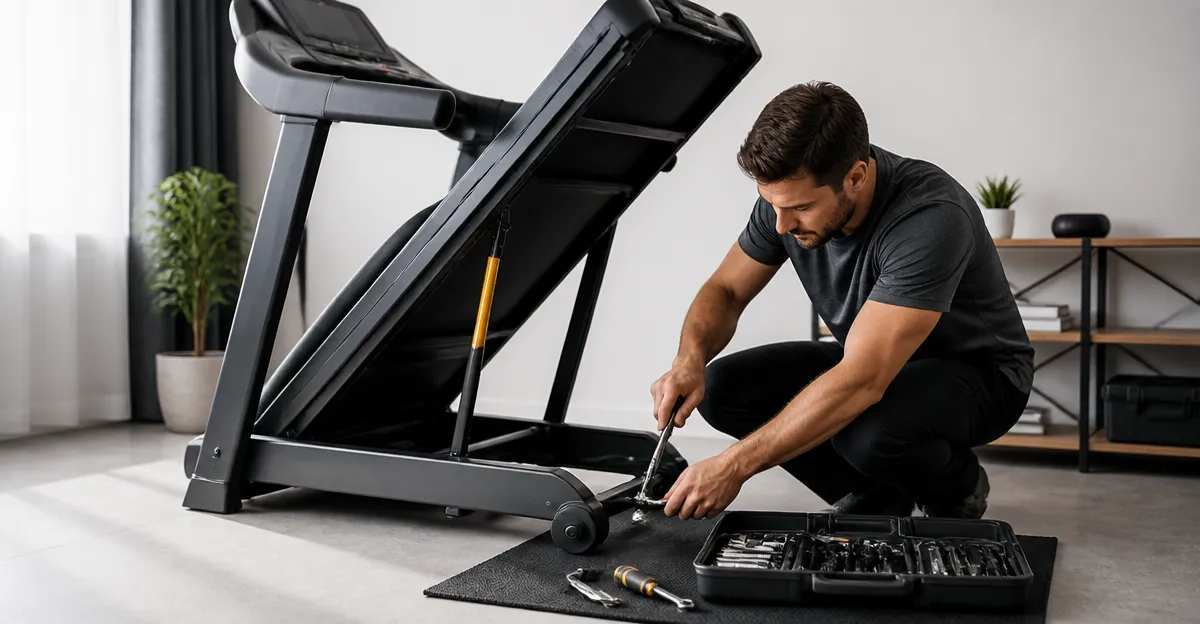
Step‑by‑Step DIY Guide: How to Convert a Folding Treadmill into a Manual Treadmill
Introduction
The modern home gym often contains a folding treadmill that relies on electricity for belt movement. Many users discover that a manual treadmill offers quieter operation, lower energy consumption, and greater portability. This guide explains the entire conversion process, from understanding the mechanical principles to selecting compatible accessories. Readers will learn how to assess their existing treadmill, gather the necessary tools, and execute a safe, reliable transformation.
By the end of this article, one will be able to convert a standard folding treadmill into a fully functional manual treadmill without compromising structural integrity. The guide also highlights products that simplify the conversion, such as power cords, replacement belts, and supportive accessories.
Background and Context
Folding treadmills are designed with a motor, drive belt, and electronic control board. The motor drives a roller that turns the belt, while the control board regulates speed and incline. In a manual treadmill, the belt is driven directly by the user’s foot pressure, eliminating the need for a motor and power supply. This mechanical simplicity reduces maintenance, extends lifespan, and allows placement in rooms without convenient outlets.
Understanding the key components is essential before beginning a conversion. The primary elements include the belt, rollers (flywheels), deck, incline mechanism, and frame. In many models, the motor and its mounting brackets can be removed, leaving a sturdy frame that still supports the belt and rollers. The user’s foot pressure then rotates the rollers, moving the belt.
When selecting a treadmill to convert, it is advisable to choose a model with a robust steel frame and a belt that can tolerate increased friction. Manual conversion is most successful on treadmills that already feature a dual‑flywheel system, because the flywheels provide the necessary inertia for smooth belt motion.
Assessing Your Existing Treadmill
Before any disassembly, inspect the treadmill for the following criteria:
- Sturdy steel frame with minimal wobble when weight is applied.
- Dual‑flywheel design, which is common in models such as the AKLUER Dual Flywheel Manual Treadmill and the Sunny Health & Fitness Manual Walking Treadmill.
- Removable motor assembly, typically secured with bolts and a wiring harness.
- Accessible power cord that can be replaced or repurposed after the motor is removed.
If the treadmill meets these conditions, the conversion will be straightforward. If the frame feels flimsy or the belt is thin, it may be more prudent to purchase a purpose‑built manual treadmill instead of converting.
Required Tools and Materials
The following tools and materials are recommended for a successful conversion:
- Adjustable wrench set (10‑mm to 20‑mm).
- Screwdriver set (Phillips and flat‑head).
- Allen key set for motor mounting bolts.
- Safety gloves and goggles.
- Replacement power cord, such as the Universal 3‑Prong Treadmill Power Cord, to safely terminate the motor’s electrical connections.
- Lubricant compatible with treadmill belts (silicone‑based).
- Leveling tool to ensure the frame sits evenly on the floor.
All items are readily available online, and the power cord listed above is rated at 110‑125 V, 10 A, and includes a 10‑ft length for flexible placement. Its thickened PVC construction has passed more than 1,000 bending tests, ensuring durability during repeated adjustments.
Step‑by‑Step Conversion Process
1. Prepare the Workspace
Clear a minimum of three feet around the treadmill to allow free movement of tools and replacement parts. Place a rubber mat on the floor to protect both the treadmill and the underlying surface. Verify that the treadmill is unplugged from any power source; if the motor has already been removed, the power cord can be safely disconnected.
2. Remove the Motor Assembly
Locate the motor housing on the rear side of the treadmill. Using the appropriate Allen key, loosen the mounting bolts that secure the motor to the frame. Disconnect the wiring harness by gently pulling the connector; the Universal 3‑Prong Treadmill Power Cord can then be attached to the harness if a temporary power source is required for testing other electronics.
After the motor is free, lift it away from the frame and set it aside. Retain the bolts in a small container for later use if you plan to reinstall the motor.
3. Adjust the Belt Tension
With the motor removed, the belt will have less assistance and may appear loose. Locate the tension adjustment bolts at the rear roller. Turn the bolts clockwise to increase tension until the belt moves smoothly without slipping when manually pulled. Over‑tightening can cause excessive wear, so a moderate tension is ideal.
4. Test Manual Operation
Step onto the belt and walk slowly. The dual‑flywheel system, if present, should rotate with each step, propelling the belt forward. If the belt stalls, check the alignment of the rollers and ensure the belt is centered on the deck. Realign any mis‑positioned rollers by loosening the mounting brackets, adjusting, and retightening.
5. Secure the Incline Mechanism
Many folding treadmills feature a fixed or adjustable incline. For a manual conversion, a fixed incline simplifies operation. If the treadmill has a lockable incline lever, engage it in the desired position. Verify that the incline does not cause the belt to drift to one side.
6. Replace the Power Cord (Optional)
If the original power cord is damaged or you wish to keep the cord for future motor re‑installation, replace it with the Universal 3‑Prong Treadmill Power Cord. Connect the NEMA 5‑15P plug to a standard wall outlet and attach the C13 connector to the treadmill’s power inlet. This step is optional for a purely manual setup, but retaining the cord provides flexibility for future upgrades.
7. Final Safety Checks
Inspect all bolts and fasteners to confirm they are tightened to manufacturer specifications. Use a level to ensure the treadmill sits evenly; an uneven base can cause the belt to drift. Apply a thin layer of silicone lubricant to the belt and rollers to reduce friction and noise.
Once all checks are complete, the treadmill is ready for regular manual use.
Comparison and Selection Guide
Choosing the right treadmill—whether to convert or to purchase a dedicated manual model—depends on several factors. The table below compares the featured products based on size, power requirements, capacity, and price.
| Product | Dimensions (Deck) | Power | Weight Capacity | Price (USD) | Rating |
|---|---|---|---|---|---|
| AKLUER Dual Flywheel Manual Treadmill | 36" x 15" | None (manual) | 330 lb | 119.99 | 4.4/5 (282 reviews) |
| ANCHEER Manual Treadmill (Model A) | 38" x 14" | None (manual) | 500 lb | 113.99 | 4.7/5 (26 reviews) |
| ANCHEER Manual Treadmill (Model B) | 38" x 14" | None (manual) | 500 lb | 113.99 | 4.7/5 (26 reviews) |
| Sunny Health & Fitness Manual Walking Treadmill | 42" x 13" | None (manual) | 330 lb | 199.99 | 4.1/5 (1,029 reviews) |
When converting an existing folding treadmill, the primary consideration is the strength of the frame. Models such as the AKLUER and Sunny Health & Fitness already employ a dual‑flywheel system, making them ideal candidates for conversion because the flywheels provide natural resistance. If the existing treadmill lacks a dual‑flywheel, the conversion may require additional modifications, such as installing aftermarket rollers.
For users who prefer a ready‑made solution, the ANCHEER models offer a 500 lb capacity and a 20 % incline, which is advantageous for high‑intensity cardio without electricity. However, these models are more expensive than a simple conversion using a basic folding treadmill and a replacement power cord.
Best Practices & Tips
- Maintain Belt Alignment: Regularly check that the belt remains centered on the deck. Misalignment can cause uneven wear and increase the risk of slipping.
- Use Non‑Slip Hand Grips: Hand grips made of soft foam, as found on the Sunny Health & Fitness treadmill, reduce hand fatigue and improve stability during vigorous walking or jogging.
- Limit Weight to Manufacturer Specification: Exceeding the stated capacity can damage the frame and rollers. The AKLUER supports up to 330 lb, while ANCHEER models support up to 500 lb.
- Perform Regular Maintenance: Wipe sweat, dust, and debris from the belt after each session. Lubricate the belt and rollers monthly to preserve smooth operation.
- Store in a Dry Environment: Moisture can corrode metal components. If the treadmill is stored in a basement or garage, consider applying a light rust inhibitor to the frame.
Applying these practices will extend the lifespan of the converted treadmill and ensure a safe workout environment. Remember that manual treadmills generate heat through friction; adequate ventilation around the device helps prevent overheating of the belt.
Frequently Asked Questions
- Can I convert any folding treadmill to manual? Most folding treadmills with a removable motor and a sturdy steel frame can be converted. Treadmills lacking a dual‑flywheel may require additional hardware to achieve smooth belt motion.
- Do I need a power source after conversion? No. Once the motor is removed, the treadmill operates solely on user‑generated force. The power cord is only necessary if you wish to retain the ability to re‑install the motor later.
- Will the incline still work after conversion? Fixed inclines remain functional, but adjustable inclines may lose precision if the motor‑driven adjustment mechanism is removed. Manual locking of the incline is recommended.
- How does belt tension affect manual operation? Proper tension ensures the belt moves without slipping. Too loose a belt will stall; too tight a belt can wear the rollers prematurely.
- Is it safe for users over 300 lb? Safety depends on the treadmill’s rated capacity. The AKLUER and Sunny Health models are rated for 330 lb, while ANCHEER models support up to 500 lb. Do not exceed the specified limit.
- Can I use the treadmill on carpeted floors? It is advisable to place the treadmill on a firm, level surface. Carpet can cause instability; a protective mat or plywood board can provide a stable base.
- Do I need professional assistance? The conversion can be performed by an experienced DIY enthusiast with basic tools. If you are unfamiliar with electrical components, consult a qualified technician for safe disconnection of the motor.
Conclusion
Converting a folding treadmill into a manual treadmill offers a cost‑effective way to achieve a quiet, energy‑free cardio solution. By following the outlined steps—preparing the workspace, removing the motor, adjusting belt tension, and performing safety checks—one can create a reliable manual device that fits seamlessly into any home gym. Selecting the appropriate accessories, such as the Universal 3‑Prong Treadmill Power Cord, further enhances the conversion experience.
Whether one chooses to convert an existing treadmill or purchase a purpose‑built manual model, the principles of frame stability, belt alignment, and proper maintenance remain constant. Applying the best‑practice tips and adhering to weight limits will ensure a safe, long‑lasting workout platform.
Products Featured in This Guide
Universal 3‑Prong Treadmill Power Cord
Price: $9.99 | Rating: 4.7/5 (879 reviews)
Featured because it provides a durable, 10‑ft replacement cord with thickened PVC and 18 AWG copper core, ensuring safe power termination during conversion or future motor re‑installation.
AKLUER Dual Flywheel Manual Treadmill
Price: $119.99 | Rating: 4.4/5 (282 reviews)
Featured for its dual‑flywheel system, fixed incline, and compact foldable design, making it an ideal candidate for conversion or as a ready‑made manual solution.
ANCHEER Manual Treadmill (Model B0HBC5FFT4)
Price: $113.99 | Rating: 4.7/5 (26 reviews)
Featured because it supports up to 500 lb, includes a 20 % incline, and folds for easy storage, providing a high‑capacity manual option without conversion.
ANCHEER Manual Treadmill (Model B0HGGMTDJV)
Price: $113.99 | Rating: 4.7/5 (26 reviews)
Featured for its identical specifications to the other ANCHER model, offering additional stock for users seeking immediate availability.
Sunny Health & Fitness Manual Walking Treadmill
Price: $199.99 | Rating: 4.1/5 (1,029 reviews)
Featured due to its 14 % fixed incline, dual‑flywheel design, and ergonomic features, making it a premium manual treadmill that can also serve as a conversion reference.