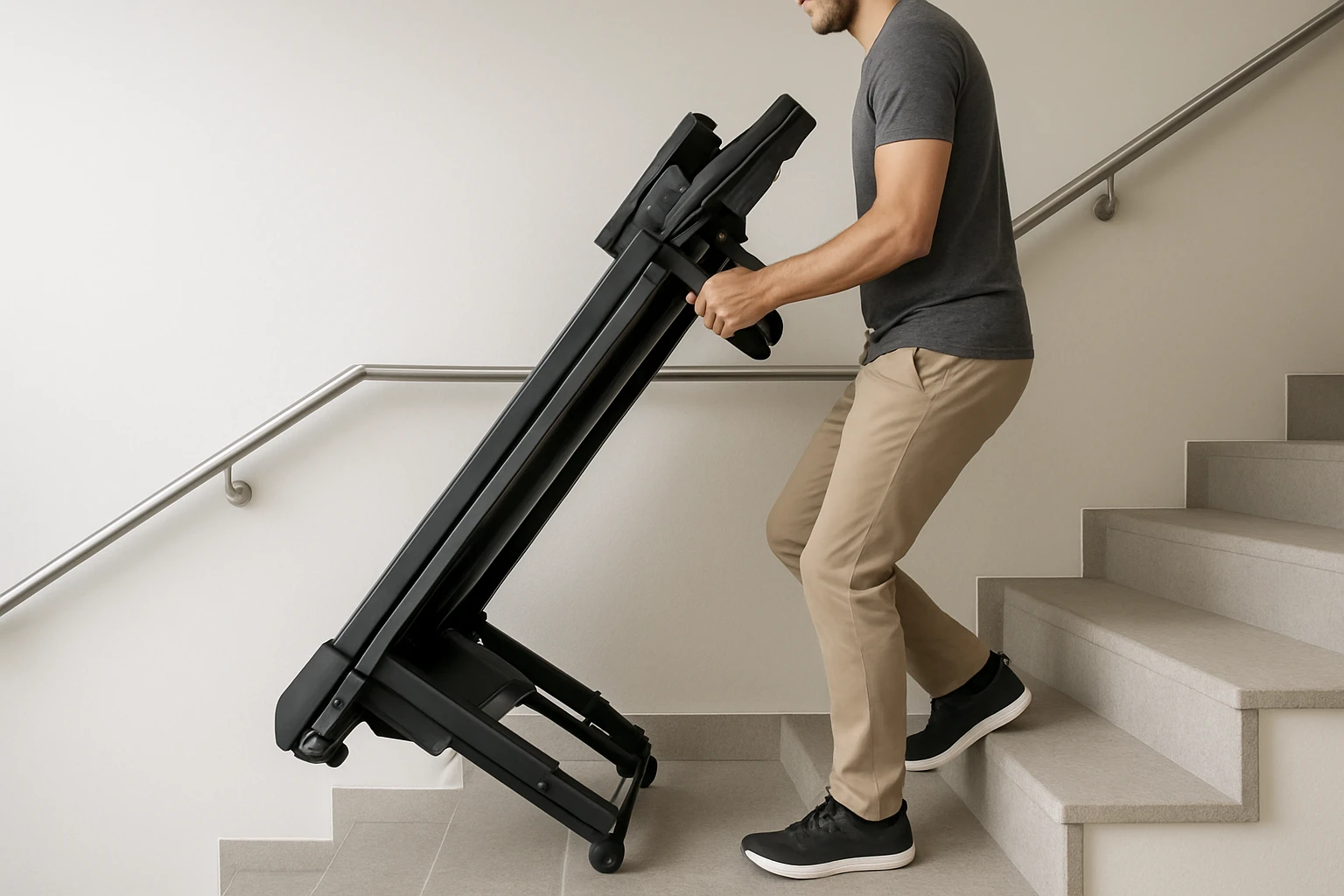
How to Move a Folding Treadmill Up Stairs Safely: Step‑by‑Step Guide to Prevent Injury and Damage
Moving a folding treadmill up a flight of stairs can appear daunting, yet with proper planning and the right tools the task becomes routine. This guide explains each phase of the process, from preparation to final placement, while highlighting safety measures that protect both the user and the equipment. By following these instructions one can avoid common injuries, prevent costly damage to the treadmill, and complete the move efficiently.
What You'll Need
- Two‑person lifting system such as KEDSUM Furniture Lifting Straps
- Heavy‑duty appliance dolly like US Cargo Control Appliance Dolly
- Protective floor runners or moving blankets
- Gloves with grip, a sturdy screwdriver, and a helper
- Measuring tape and a marker for clearance checks
Step 1: Assess the Staircase and Treadmill Dimensions
Before any lifting occurs, measure the width of each stair tread, the height of the riser, and the clearance at the landing. Verify that the folded treadmill, typically 3‑4 feet long and 2‑3 feet wide, will fit without striking handrails or walls. Mark any narrow points with a piece of tape so the team knows where extra caution is required. This assessment reduces the risk of unexpected obstruction that could cause the treadmill to tilt or the lifters to lose balance.
Step 2: Prepare the Treadmill for Transport
First, disconnect the power cord and coil it neatly to avoid tripping. Remove any detachable accessories such as heart‑rate monitors, tablet holders, or side rails. Secure the folding mechanism by tightening the latch; this prevents the deck from unfolding mid‑move. Place a moving blanket underneath the treadmill to protect the frame from scratches, especially when it will rest on the dolly or the floor runners.
Step 3: Apply the KEDSUM Furniture Lifting Straps
The lifting straps act as a hands‑free vest that distributes weight across the shoulders and back, reducing strain on the lower back. Slip each strap over the shoulders of both movers, then attach the polyester belts around the treadmill’s central frame. The military‑grade zinc alloy buckles provide a non‑slip bite, ensuring the straps remain secure even when the load approaches the 800‑pound capacity. Adjust the straps so the treadmill sits snugly against the vest, allowing the movers to maintain balance while stepping.
Key features that make these straps ideal for this step include their ergonomic foam padding, which cushions the shoulders, and the reinforced corner design that prevents the belt from shifting. At $35.99 with a 4.4‑star rating from 217 reviewers, they offer a cost‑effective solution compared with renting a professional lifting harness.
Step 4: Position the US Cargo Control Appliance Dolly at the Base of the Stairs
The appliance dolly serves as a stable platform that bears the majority of the treadmill’s weight, allowing the lifters to focus on maneuvering rather than supporting the entire load. Place the dolly on a level surface at the bottom of the staircase, ensuring the kickback wheels are locked in the upright position for maximum stability. The dolly’s 1,200‑pound capacity far exceeds the treadmill’s weight, providing a safety margin that protects both the equipment and the users.
Features such as the auto‑recoil strap system keep the treadmill firmly strapped to the dolly during ascent, while the retractable swivel casters enable smooth turning on tight stair landings. Priced at $521.91 and backed by a 4.3‑star rating from 91 reviewers, this dolly is a premium but durable investment for frequent movers.
Step 5: Load the Treadmill onto the Dolly
With the lifting straps secured, the movers should gently tilt the treadmill backward while guiding it onto the dolly’s flat deck. The foam‑padded vest keeps the back straight, and the dolly’s anti‑slip surface prevents the treadmill from sliding sideways. Once the treadmill is centered, engage the auto‑recoil strap to lock it in place. Verify that the treadmill does not wobble by applying a slight push from each side; any movement indicates the need for readjustment.
Step 6: Ascend the Stairs Using a Coordinated Two‑Person Technique
Both movers should position themselves on opposite sides of the dolly, maintaining a staggered foot placement to improve stability. The lead mover takes the inside step while the trailing mover follows, keeping the dolly’s wheels aligned with the stair tread. The kickback wheels on the dolly allow it to roll up the stairs with minimal effort, while the swivel casters can be locked to prevent unwanted rotation on narrow steps.
Communication is essential; a simple “up” and “steady” cue ensures that both participants move in unison. If a step feels too steep, pause, reposition the dolly’s wheels, and continue. This method distributes the load evenly across both movers, reducing the likelihood of back injury.
Step 7: Secure the Treadmill at the Upper Landing
When the dolly reaches the top of the staircase, gently roll it onto a sturdy, level surface. Use the lifting straps to lower the treadmill from the dolly onto the floor runners or directly onto the intended location. Remove the auto‑recoil strap, then detach the lifting straps from the treadmill. Perform a final inspection for any scratches or dents that may have occurred during transport.
Tips & Pro Tips
- Always test the stability of the dolly on a single stair before committing to the full ascent.
- Wear supportive shoes with non‑slip soles to improve traction on each tread.
- If the staircase has a narrow landing, consider using a second dolly as a temporary support platform.
- Keep a spare set of gloves; sweaty hands can reduce grip on the straps and dolly handles.
- For extremely tight stairwells, remove the treadmill’s side rails to reduce width, then reattach them after the move.
Troubleshooting
Problem: The dolly wheels slip on a carpeted stair tread.
Solution: Place a thin piece of plywood or a rubber mat under the wheels to create a firm surface.
Problem: The lifting straps feel too loose and the treadmill shifts.
Solution: Tighten the buckles and ensure the foam vest pads are positioned correctly against the shoulders; the reinforced corner design should prevent slippage.
Conclusion
By following the outlined steps one can move a folding treadmill up stairs safely, efficiently, and without damage. The combination of KEDSUM Furniture Lifting Straps and US Cargo Control Appliance Dolly provides ergonomic support and robust load‑bearing capacity, making the process smoother than using improvised methods. Apply the pro tips, respect the weight limits, and communicate clearly with your moving partner to ensure a successful relocation.
Products Mentioned in This Guide
Frequently Asked Questions
What tools are essential for moving a folding treadmill up stairs?
You need two‑person lifting straps, a heavy‑duty appliance dolly, moving blankets, grip gloves, a screwdriver, and a helper.
How do I assess whether my stairs can accommodate a folding treadmill?
Measure the treadmill’s length, width, and height and compare them to stair width, riser height, and landing space, allowing clearance for handles and straps.
What is the safest way to lift a folding treadmill onto a dolly?
Secure the lifting straps around the treadmill’s frame, have two people lift evenly, and slide the dolly underneath while keeping the load balanced.
How can I prevent damage to the treadmill during the move?
Use moving blankets on the treadmill’s deck, keep the treadmill upright, avoid sudden jerks, and lock the folding mechanism before transport.
Are there any safety precautions to avoid personal injury?
Wear grip gloves, keep a firm stance, lift with your legs not your back, communicate with your partner, and never attempt the move alone.