How to Childproof a Folding Treadmill: 10 Essential Steps to Prevent Accidents and Keep Kids Safe
Introduction
Folding treadmills provide convenient cardio training while saving space, yet they also introduce hazards for curious children. This guide explains ten essential steps that transform a potentially dangerous piece of equipment into a child‑friendly zone. Readers will learn how to secure moving parts, install protective accessories, and establish safe habits that reduce the risk of injury. By following these instructions, one can maintain an effective home gym without compromising the safety of family members.
What You'll Need
- Non‑slip rubber mat or interlocking floor tiles
- Adjustable safety gate or play yard
- Furniture straps or wall anchors
- Locking mechanisms for the folding frame
- TreadLife Safety Key – a replacement safety key designed for compatible Nordictrack, Reebok, and HealthRider treadmills
- Tool kit (screwdriver set, Allen wrenches)
- Child‑proof outlet covers
Step 1: Position the Treadmill Away From High‑Traffic Areas
Begin by locating the treadmill in a room where foot traffic is minimal. Ideally, place it against a sturdy wall that can support the folding mechanism. Keeping the equipment away from doorways and play areas reduces the likelihood that a child will stumble onto it while it is in use. If space constraints force a more central location, consider installing a non‑slip rubber mat underneath to prevent accidental sliding.
Step 2: Secure the Folding Mechanism
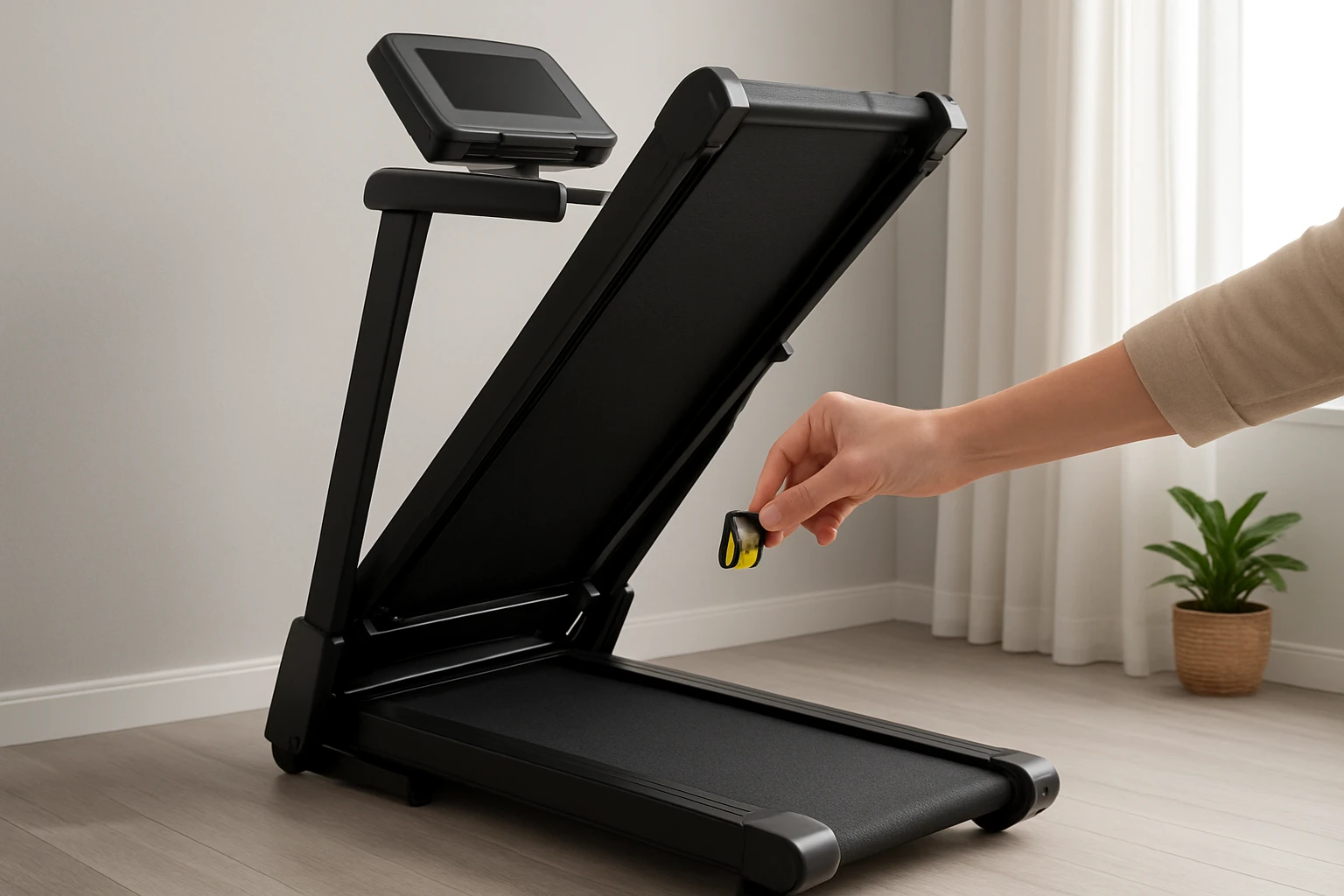
Most folding treadmills feature a latch that holds the deck in the upright position. Verify that the latch engages fully each time the treadmill is stored. If the latch feels loose, tighten the associated bolts with a screwdriver or Allen wrench. For added security, attach a secondary lock—such as a small padlock—through the existing latch hole. This prevents a child from inadvertently releasing the deck.
Step 3: Install a Non‑Slip Floor Mat
A sturdy mat not only protects the floor but also creates a visual cue that the area is a workout zone. Choose a mat that is at least 2 inches thick and extends 2 feet beyond each side of the treadmill. Interlocking tiles are an excellent option because they stay in place and can be removed for cleaning. The added friction discourages children from running onto the treadmill while it is folded.
Step 4: Use a Safety Gate to Block Access
Install an adjustable safety gate at the entrance to the room or directly in front of the treadmill when it is folded. The gate should have a self‑closing mechanism and a latch that is out of reach for toddlers. Position the gate so that it can be opened easily by an adult but requires a deliberate two‑handed action that a child cannot replicate.
Step 5: Replace or Verify the Safety Key
The safety key is a small plastic device that disengages the treadmill's motor when removed, preventing the belt from moving unintentionally. Many families lose this component, leaving the equipment vulnerable. Install the TreadLife Safety Key to restore this critical safety feature. This key is compatible with specific Nordictrack, Reebok, and HealthRider models (part #160695). It measures 1.75" wide by 3" long, with a 2.25" insert, and comes in a bright blue color that is easy to locate. Priced at $14.95, it carries a 4.7‑star rating from 307 reviewers, indicating reliable performance and durability. By using a dedicated safety key, one ensures that the treadmill cannot start without intentional user input, dramatically reducing the risk of accidental activation.
Step 6: Anchor the Treadmill to the Wall or Floor
Even when folded, a treadmill can tip if a child climbs onto it. Use furniture straps or wall anchors to tether the base to a solid structure. Drill a short pilot hole into the treadmill frame and secure a heavy‑duty strap that attaches to a wall stud or floor joist. This simple measure prevents the unit from toppling over, protecting both the equipment and any nearby children.
Step 7: Cover Electrical Outlets and Cords
Power cords present an electrocution hazard. Route the cord behind the treadmill and secure it with a cable organizer. Install child‑proof outlet covers on any receptacles within arm's reach of the treadmill. When the treadmill is not in use, unplug it and store the cord on a hook out of sight.
Step 8: Educate Family Members About Safe Use
Safety is reinforced through consistent behavior. Conduct a brief family meeting to explain why the treadmill must remain locked, why the safety key is essential, and why children are prohibited from entering the workout zone without adult supervision. Encourage older children to model safe practices, as peer influence can be a powerful deterrent.
Step 9: Perform Regular Maintenance Checks
Inspect the treadmill weekly for loose bolts, worn safety key inserts, or frayed cords. Tighten any components that have shifted and replace worn parts promptly. Regular maintenance ensures that the protective measures remain effective over time and that the treadmill operates as intended.
Step 10: Create a Visual Warning System
Place a bright, removable sign on the treadmill indicating "Do Not Touch – Children" when the unit is in use or folded. Visual cues remind adults to keep the area clear and signal to children that the equipment is off‑limits. Combine the sign with a floor‑level tape marker that outlines a safe perimeter around the treadmill.
Tips & Pro Tips
- When folding the treadmill, always engage the latch before storing the safety key.
- Use a magnetic strip on the wall to hold the safety key when not in use; this prevents loss.
- Consider a portable playpen that can be moved easily if the treadmill needs to be relocated.
- Test the safety key regularly by attempting to start the treadmill without it; the belt should remain stationary.
Troubleshooting
| Problem | Possible Cause | Solution |
|---|---|---|
| Safety key does not fit | Incorrect part number for the treadmill model | Verify the treadmill model requires part #160695 before purchasing a replacement. |
| Latch fails to stay closed | Loose screws or worn latch mechanism | Tighten all bolts and, if necessary, replace the latch according to the manufacturer's instructions. |
| Floor mat slides | Insufficient friction or improper placement | Use a double‑sided non‑slip backing underneath the mat. |
Conclusion
Childproofing a folding treadmill requires a combination of mechanical safeguards, environmental adjustments, and family education. By following the ten steps outlined above—including the strategic use of the TreadLife Safety Key—one can enjoy a functional home gym while ensuring that children remain safe. Regular inspections and consistent habits will preserve the protective measures, allowing the treadmill to serve the household for years to come.
Products Mentioned in This Guide
Frequently Asked Questions
How can I keep a folding treadmill out of reach when it’s not in use?
Store the treadmill in a locked room or behind a safety gate and use the built‑in folding lock or a TreadLife Safety Key to secure the frame.
What are the essential safety accessories for child‑proofing a folding treadmill?
A non‑slip rubber mat, adjustable safety gate or play yard, furniture straps or wall anchors, a locking mechanism for the frame, and child‑proof outlet covers.
How do I lock the folding frame to prevent accidental unfolding?
Engage the treadmill’s built‑in lock lever or install a TreadLife Safety Key, then tighten any additional frame straps or wall anchors for extra stability.
Is a non‑slip mat necessary around a treadmill with kids at home?
Yes, a rubber mat or interlocking floor tiles prevent slips and keep the treadmill stable if a child steps on or near it.
How often should I check the child‑proofing measures on my treadmill?
Inspect locks, straps, and gate fittings weekly, and after any movement or cleaning, to ensure they remain secure.