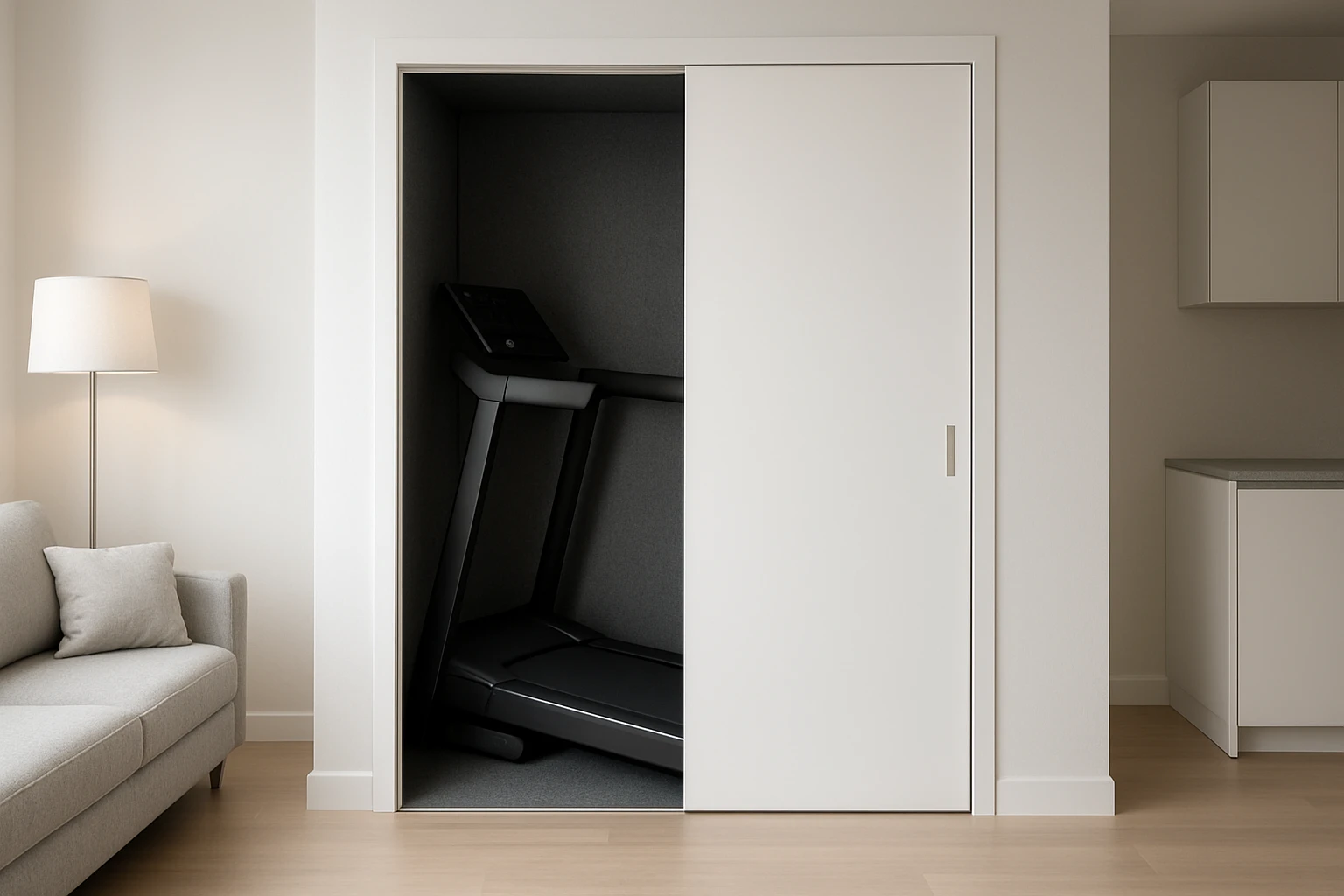
How to Build a Soundproof Treadmill Closet in a Studio Apartment: Step‑by‑Step DIY Guide for Quiet Workouts
Introduction
Living in a studio apartment often means sharing walls, floors, and ceilings with neighbors who expect a low noise environment. When a treadmill is added to the limited space, the resulting impact noise and vibration can become a source of conflict. This guide explains how to design and construct a dedicated treadmill closet that contains sound, protects flooring, and remains functional within a compact footprint. Readers will learn the underlying acoustic principles, the materials required, and a clear sequence of actions that lead to a finished, quiet workout zone.
The guide also highlights three Amazon products that enhance each stage of the build: acoustic foam panels for sound absorption, a foldable treadmill mat for floor protection, and an extra‑wide exercise mat for additional cushioning. By following the steps, one can enjoy a treadmill routine without disturbing a roommate, a downstairs neighbor, or a late‑night study session.
Background and Context
Sound travels in three primary ways: airborne transmission, structural vibration, and reverberation within a room. A treadmill generates impact forces that travel through the floor structure, creating both airborne noise (the whirring of the motor) and structural noise (the thump of the belt). In a studio apartment, the floor is often a concrete slab or wood joist system that readily transmits vibration to adjoining units.
Effective mitigation therefore requires a layered approach: isolate the source, absorb reflected sound, and dampen vibrations before they reach the building structure. Acoustic science recommends using high‑density porous materials to trap airborne frequencies, while dense, resilient layers such as rubber or PVC reduce impact forces. Proper sealing of gaps prevents low‑frequency leaks, which are the most difficult to control.
Understanding these concepts helps the builder select the right products and apply them in the correct order. The following sections break the project into logical phases, each supported by a product recommendation that aligns with the technical requirements.
Planning the Closet Layout
The first step is to identify a suitable location. In a studio apartment, the closet can be created by repurposing an existing wardrobe, a small alcove, or a portable shelving unit. Measure the available width, height, and depth, then subtract the treadmill’s footprint (typically 55" × 23.6"). Allow at least three inches of clearance on each side for acoustic panels and floor mats.
Draft a simple sketch that shows the treadmill positioned against one wall, with the back wall left open for ventilation. Mark the locations where acoustic panels will be installed on the front and side walls, and indicate where the floor‑protective mat will sit beneath the machine. This visual plan prevents costly mistakes during installation.
When planning, consider the height of the ceiling. Acoustic foam panels are most effective when they cover the first two meters of wall space, where the majority of reflected sound energy concentrates. If the ceiling height exceeds this range, additional panels can be placed on the upper portion, but the primary focus should remain on the lower zone.
Acoustic Treatment with Dmsky Acoustic Foam Panels
Airborne noise from the treadmill motor and belt can be absorbed by porous foam that converts sound energy into heat. The Dmsky Acoustic Foam Panels provide high‑density, 1" × 12" × 12" wedges that are lightweight and easy to install. Each pack contains 80 panels, enough to cover the front and side walls of a typical closet.
Key specifications include a 4.1‑star rating from 3,624 reviews, a price of $41.64, and an environmentally friendly polyurethane composition that is non‑toxic and formaldehyde‑free. The panels are designed to reduce echoes, standing waves, and flutter echoes, which are common in small, reflective spaces.
Installation is straightforward: apply a spray adhesive or nail‑free adhesive to the back of each panel, then press firmly onto the wall surface. For best results, stagger the panels so that the triangular faces interlock, creating a continuous absorptive surface. Allow the adhesive to cure for 24 hours before placing the treadmill inside the closet.
Because the panels are vacuum‑packed, they may appear compressed on arrival. Open the package in a ventilated area and allow the foam to expand for at least 24 hours, or gently pull the triangular sections to accelerate recovery. This step ensures that the panels achieve their full thickness and acoustic performance.
Floor Protection with Stepwaver Foldable Treadmill Mat
Impact noise travels through the floor before it becomes airborne. A dense, shock‑absorbing layer placed directly beneath the treadmill reduces this transmission. The Stepwaver Foldable Treadmill Mat is engineered from industrial‑grade PVC, offering a 1/4‑inch thickness that balances durability with portability.
At a price of $23.74 and a 4.6‑star rating from 1,156 reviews, this mat provides a non‑slip surface, waterproof protection, and noise‑dampening properties. Its foldable design allows the user to store the mat when the treadmill is not in use, preserving valuable floor space.
To install, unroll the mat on a clean, level surface and position the treadmill so that its legs rest directly on the mat. The textured surface prevents slipping during vigorous workouts, while the PVC composition absorbs vibrations that would otherwise travel into the sub‑floor.
For added protection, consider placing a thin layer of high‑density foam under the mat if the floor is particularly resonant. However, the mat alone is sufficient for most hardwood or laminate flooring found in studio apartments.
Additional Cushioning with Gxmmat Extra Wide Exercise Mat
In some layouts, the closet may be large enough to accommodate a secondary mat that serves as a stretching or warm‑up area. The Gxmmat Extra Wide Exercise Mat offers a 7‑foot width and 7 mm high‑density foam, making it ideal for yoga, bodyweight circuits, or as an extra buffer between the treadmill and the closet walls.
This product retails for $246.00, carries a 4.7‑star rating from 214 reviews, and is certified free of phthalates, latex, silicone, and other harmful chemicals. Its double‑sided non‑slip surface ensures stability on carpet, tile, or wood flooring.
Because the mat is large, it can be folded and stored when not in use, preserving the closet’s compact nature. When deployed, it adds a layer of acoustic insulation by absorbing low‑frequency vibrations that may escape the treadmill’s base.
While the price is higher than the other two products, the mat’s size and durability make it a worthwhile investment for users who require a versatile workout surface in addition to treadmill use.
Comparison and Selection Guide
| Feature | Dmsky Acoustic Foam Panels | Stepwaver Foldable Treadmill Mat | Gxmmat Extra Wide Exercise Mat |
|---|---|---|---|
| Primary Function | Sound absorption (airborne) | Floor protection and vibration damping | Additional cushioning and large‑area coverage |
| Material | High‑density polyurethane foam | Industrial‑grade PVC | 7 mm high‑density EVA foam |
| Dimensions | 1" × 12" × 12" each (80 pcs) | 55" × 23.6" (1/4" thick) | 7 ft × 7 ft (multiple size options) |
| Price (USD) | $41.64 | $23.74 | $246.00 |
| Average Rating | 4.1 / 5 (3,624 reviews) | 4.6 / 5 (1,156 reviews) | 4.7 / 5 (214 reviews) |
| Installation Difficulty | Easy (adhesive required) | Very easy (unroll and place) | Easy (roll out, optional folding) |
| Special Considerations | Not a sound‑proofing barrier, only absorption | Non‑slip surface, waterproof | Double‑sided non‑slip, large footprint |
When selecting products, prioritize the acoustic foam for rooms where echo is a problem, the treadmill mat for protecting delicate flooring, and the extra‑wide mat only if additional space is available and a broader cushioning surface is desired. The combination of all three provides the most comprehensive noise mitigation strategy.
Best Practices and Tips
- Seal all gaps around the closet door with weather‑stripping to prevent low‑frequency leakage.
- Mount the acoustic foam panels at least 2 inches away from the wall surface using spacers; this creates an air cavity that improves absorption.
- Secure the treadmill mat with double‑sided tape if the floor is exceptionally smooth; this prevents micro‑movement that can amplify vibration.
- Install a small vent or passive grille at the top of the closet to allow air circulation; this prevents overheating of the treadmill motor.
- Periodically check the adhesive on the foam panels for wear, especially in humid environments, and re‑apply as needed.
- When using the extra‑wide mat, place it on the side opposite the treadmill to act as a secondary barrier for foot traffic and equipment movement.
- Consider adding a thin layer of mass‑loaded vinyl on the exterior wall of the closet for additional low‑frequency damping, though this is optional for most studio apartments.
Frequently Asked Questions
- Do acoustic foam panels actually block treadmill noise? The panels absorb airborne sound and reduce reverberation, but they do not block structural vibrations. Combining foam with a dense floor mat provides the most effective reduction.
- Can I use regular carpet padding instead of the Stepwaver mat? Regular carpet padding may compress over time and lacks the non‑slip surface required for treadmill stability. The Stepwaver mat offers a waterproof, durable layer that maintains performance.
- Is the Gxmmat mat necessary for a small closet? If the closet dimensions are less than 4 feet wide, the extra‑wide mat may be excessive. It is most beneficial in larger spaces where a secondary workout area is desired.
- How long does it take for the acoustic foam to expand after unpacking? The foam typically regains its shape within 24 hours in a well‑ventilated area. For faster results, gently pull the triangular sections apart and allow additional time for air to fill the cells.
- Will the closet interfere with the treadmill’s warranty? Most treadmill manufacturers do not restrict usage on protective mats, provided the mat does not impede ventilation. Review the warranty terms to ensure compliance.
- Can I paint the acoustic foam panels to match my décor? Painting is not recommended because it can seal the porous surface, reducing its absorptive capability. If colour coordination is important, consider purchasing foam in a colour that matches the room.
- What maintenance is required for the floor mats? Wipe the Stepwaver mat with a damp cloth after each workout to remove sweat and dust. The Gxmmat mat can be spot‑cleaned with mild soap; avoid harsh chemicals that could degrade the foam.
Conclusion
Constructing a soundproof treadmill closet in a studio apartment is achievable with careful planning, appropriate materials, and attention to acoustic principles. By installing Dmsky Acoustic Foam Panels for airborne sound absorption, placing a Stepwaver Foldable Treadmill Mat beneath the machine, and optionally adding a Gxmmat Extra Wide Exercise Mat for extra cushioning, the builder creates a quiet, safe, and aesthetically pleasing workout environment. The result is a personal fitness space that respects both the occupant’s health goals and the building’s acoustic harmony.
Products Featured in This Guide
Dmsky Acoustic Foam Panels
Price: $41.64 | Rating: 4.1/5 (3,624 reviews)
Why featured: Provides high‑density sound absorption to reduce echo and airborne treadmill noise within the closet.
Stepwaver Foldable Treadmill Mat
Price: $23.74 | Rating: 4.6/5 (1,156 reviews)
Why featured: Offers a durable, non‑slip, waterproof layer that dampens impact vibrations and protects flooring.
Gxmmat Extra Wide Exercise Mat
Price: $246.00 | Rating: 4.7/5 (214 reviews)
Why featured: Supplies a large, high‑density cushioning surface for additional vibration isolation and versatile workout space.