Introduction
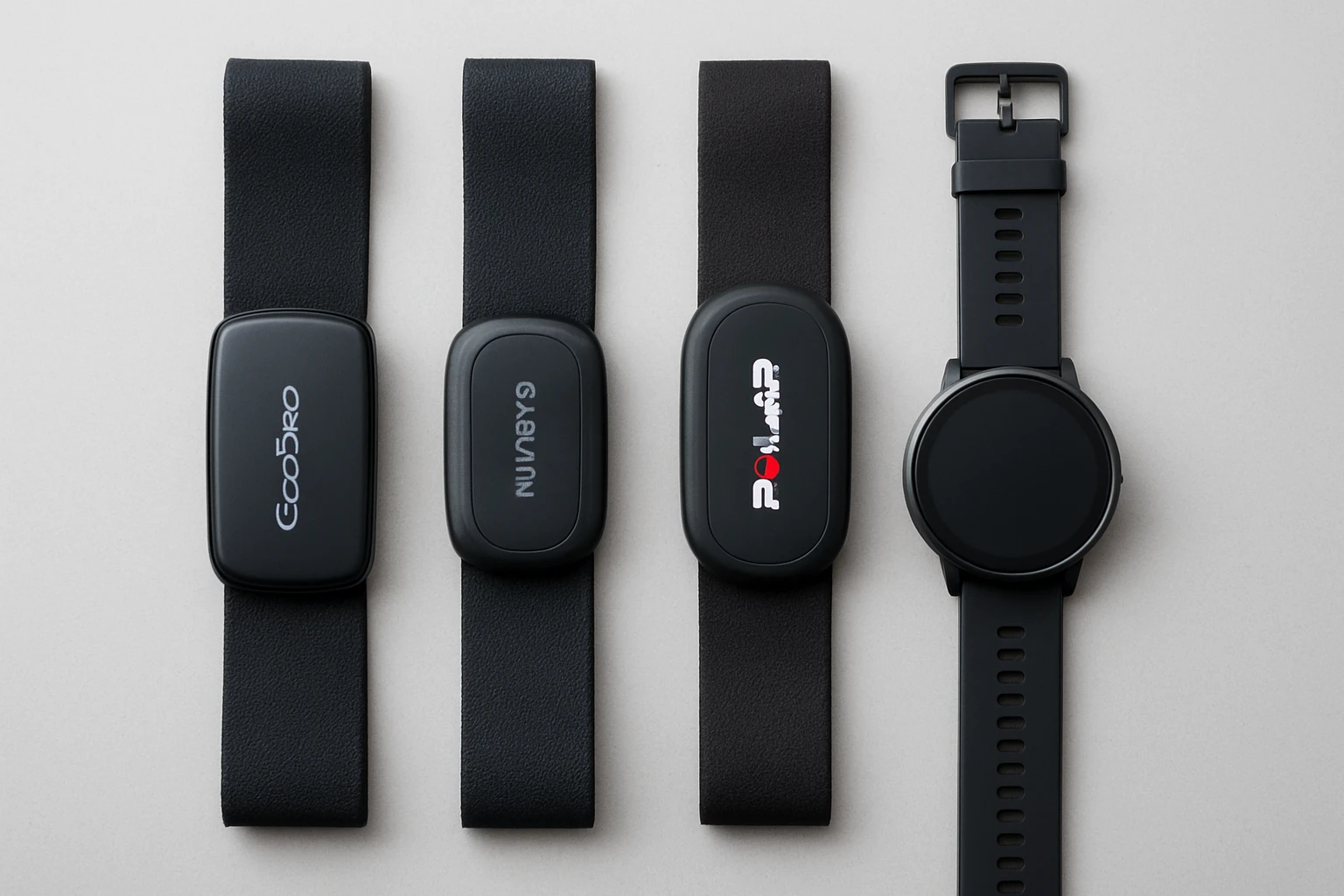
Heart‑rate monitoring has become a cornerstone of modern fitness, enabling athletes and casual exercisers to train with precision. Four popular Amazon offerings dominate the market: the CooSpo H6 Heart Rate Monitor, the Garmin HRM 600, the Polar H9 Heart Rate Sensor, and the Mindrose Health Fitness Smartwatch. This article evaluates each device against objective criteria, helping readers decide which product aligns with their training goals and budget.
Individual Product Overviews
CooSpo H6 Heart Rate Monitor
Price: $35.99 Rating: 4.1/5 (3,282 reviews)
The H6 delivers ±1 BPM accuracy, dual‑mode Bluetooth 4.0 and ANT+, and an IP67‑rated strap that tolerates sweat and rain. Battery life reaches 300 hours on a replaceable CR2032 cell. Users praise its broad compatibility with apps such as Strava, Zwift, and Peloton, while some note occasional disconnections when switching phone apps.
Garmin HRM 600
Price: $169.99 Rating: 4.5/5 (714 reviews)
The HRM 600 provides real‑time heart‑rate and HRV data, machine‑washable straps in two sizes, and seamless integration with Garmin’s ecosystem. Battery is rechargeable, and the strap is designed for long‑duration comfort. Reviewers highlight its rock‑solid accuracy and stable connection, though the premium price limits appeal for casual users.
Polar H9 Heart Rate Sensor
Price: $69.90 Rating: 4.0/5 (9,684 reviews)
Polar’s H9 combines Bluetooth, ANT+, and 5 kHz transmission, offering 400 hours of battery life on a replaceable coin cell. The strap is made from a polyamide‑elastane blend for comfort. Customers appreciate its reliability across multiple platforms, yet a minority report occasional spikes and a lack of direct phone support.
Mindrose Health Fitness Smartwatch
Price: $35.99 Rating: 4.8/5 (76 reviews)
This all‑in‑one smartwatch provides 24/7 heart‑rate monitoring, blood‑oxygen, blood‑pressure estimation, sleep staging, and 115 sport modes. The 1.47" HD color touchscreen is protected by an IP68‑rated case. Users commend its feature set for the price, though the device is a wrist‑based sensor rather than a dedicated chest strap.
Head‑to‑Head Comparison
Price and Value
The CooSpo H6 and Mindrose smartwatch share the lowest price point at $35.99, making them attractive to budget‑conscious consumers. The Polar H9 sits in the mid‑range at $69.90, offering a balance of accuracy and feature breadth. The Garmin HRM 600 commands a premium of $169.99, justified by its professional‑grade data, rechargeable battery, and integration with Garmin’s advanced training metrics.
Features and Specifications
- Connectivity: CooSpo H6 – Bluetooth 4.0 & ANT+; Garmin HRM 600 – Bluetooth; Polar H9 – Bluetooth, ANT+, 5 kHz; Mindrose – Bluetooth only.
- Battery: CooSpo – 300 h CR2032; Garmin – rechargeable (≈10 days typical); Polar – 400 h CR2032; Mindrose – approx. 5 % daily drain, weekly recharge.
- Water Resistance: CooSpo – IP67 (rain, sweat); Garmin – IPX7 (submersion up to 1 m); Polar – IP67; Mindrose – IP68 (full waterproof).
- Form Factor: CooSpo, Garmin, Polar – chest straps; Mindrose – wristwatch.
Customer Ratings and Feedback
Garmin leads with a 4.5‑star rating, reflecting strong confidence in accuracy and durability. Mindrose’s 4.8‑star rating is impressive but derived from a small sample size (76 reviews). Polar’s 4‑star rating is solid, yet the large review count (9,684) surfaces both praise for reliability and criticism for occasional sensor spikes. CooSpo’s 4.1‑star rating indicates mixed experiences; many users commend its price and compatibility, while some report strap wear and intermittent connectivity.
Performance and Reliability
Professional athletes often require sub‑second heart‑rate response. Garmin’s HRM 600 consistently delivers stable data across intervals, as highlighted by a reviewer: “no dropouts, no random spikes.” Polar’s H9 provides comparable accuracy for everyday training, though a minority experienced “wildly inaccurate readings” after a few months. CooSpo’s ±1 BPM claim holds in most scenarios, yet one user noted “inconsistent readings where it says my heart rate is low.” The Mindrose smartwatch, being wrist‑based, cannot match chest‑strap precision, but its multi‑sensor suite offers valuable health insights for casual users.
Best Use Cases
- CooSpo H6: Budget‑focused cyclists, indoor trainers, and gamers who need a reliable chest strap for apps like Zwift or Pulsoid.
- Garmin HRM 600: Competitive runners, triathletes, and serious cyclists who rely on HRV, advanced running dynamics, and seamless Garmin Connect integration.
- Polar H9: Multi‑sport enthusiasts seeking a versatile sensor that works with both Garmin and Polar ecosystems, especially those who value long battery life.
- Mindrose Smartwatch: Casual fitness participants who desire an all‑in‑one wrist device with heart‑rate, oxygen, and blood‑pressure monitoring without purchasing a separate chest strap.
Comparison Table
| Feature | CooSpo H6 | Garmin HRM 600 | Polar H9 | Mindrose Smartwatch |
|---|---|---|---|---|
| Price (USD) | $35.99 | $169.99 | $69.90 | $35.99 |
| Rating | 4.1/5 (3,282) | 4.5/5 (714) | 4.0/5 (9,684) | 4.8/5 (76) |
| Connectivity | Bluetooth 4.0 & ANT+ | Bluetooth | Bluetooth, ANT+, 5 kHz | Bluetooth |
| Battery Life | 300 h (CR2032) | Rechargeable (~10 days) | 400 h (CR2032) | ~5 % per day (weekly charge) |
| Water Resistance | IP67 | IPX7 | IP67 | IP68 |
| Form Factor | Chest strap | Chest strap | Chest strap | Wristwatch |
| Supported Apps | Strava, Zwift, Peloton, etc. | Garmin Connect, compatible apps | Polar Beat, Strava, Garmin, etc. | DaFit, notifications, weather |
Pros & Cons
CooSpo H6 Heart Rate Monitor
- Pros: Low price, dual‑mode Bluetooth/ANT+, ±1 BPM accuracy, long battery life, wide app compatibility.
- Cons: Strap durability concerns under heavy sweat, occasional disconnections when switching phone apps, no rechargeable battery.
Garmin HRM 600
- Pros: Industry‑leading accuracy, stable connection, rechargeable battery, comfortable machine‑washable strap, advanced HRV and running dynamics.
- Cons: High price, chest strap may be uncomfortable for some, limited to Garmin ecosystem for full feature set.
Polar H9 Heart Rate Sensor
- Pros: Triple‑protocol connectivity, 400 h battery, comfortable elastic strap, works with many platforms, affordable mid‑range price.
- Cons: Occasional spikes reported, protective film must be removed before first use, customer service primarily email‑based.
Mindrose Health Fitness Smartwatch
- Pros: All‑in‑one health metrics, 115 sport modes, IP68 waterproof, affordable, bright HD touchscreen.
- Cons: Wrist‑based heart‑rate less precise than chest straps, battery requires weekly charging, limited third‑party app integration.
Recommendations by Use Case
- Competitive Triathlete: Garmin HRM 600 provides the most reliable data and integrates directly with training analysis tools.
- Budget‑Conscious Cyclist: CooSpo H6 offers sufficient accuracy for indoor and outdoor rides without breaking the bank.
- Multi‑Sport Hobbyist: Polar H9 balances price, battery life, and compatibility across running, swimming (non‑submersible), and gym equipment.
- Casual Health Tracker: Mindrose Smartwatch delivers comprehensive health monitoring on the wrist for users who prefer an all‑in‑one device.
FAQ
- Can the CooSpo H6 be used while swimming?
- No. The IP67 rating permits rain and sweat, but the device is not designed for submersion.
- How often does the Garmin HRM 600 need to be recharged?
- Typical usage depletes the battery after about ten days; a full charge restores it for another week of training.
- Does the Polar H9 support simultaneous Bluetooth and ANT+ connections?
- Yes. The sensor can broadcast on both protocols at the same time, allowing a watch and a bike computer to receive data concurrently.
- Is the Mindrose smartwatch’s blood‑pressure reading medically accurate?
- No. The manufacturer advises using the measurement only for trend tracking, not for clinical decisions.
- Which device offers the longest battery life?
- The Polar H9 provides up to 400 hours on a CR2032 cell, surpassing the CooSpo H6’s 300 hours and the Garmin’s rechargeable battery.
- Can any of these products be paired with Apple Watch?
- Only the chest‑strap sensors (CooSpo H6, Garmin HRM 600, Polar H9) can transmit heart‑rate data to the Apple Watch via Bluetooth; the Mindrose smartwatch is a standalone watch and does not pair with another watch.
Conclusion
When evaluating heart‑rate solutions, price, accuracy, and ecosystem compatibility dominate the decision matrix. The Garmin HRM 600 stands out for elite athletes who demand rock‑solid data and deep integration with Garmin’s training platform. For users seeking a capable yet affordable chest strap, the CooSpo H6 delivers respectable accuracy and broad app support. The Polar H9 offers a balanced middle ground with triple‑protocol connectivity and a long‑lasting battery. Finally, the Mindrose Smartwatch provides an all‑in‑one health hub for casual users who prefer wrist‑based monitoring. Selecting the right product depends on the individual’s training intensity, budget, and preferred data ecosystem.
Products Mentioned in This Review
Frequently Asked Questions
What is the accuracy difference between the CooSpo H6 and its competitors?
The CooSpo H6 claims ±1 BPM accuracy, which is comparable to the Garmin HRM 600 and Polar H9, while the Mindrose smartwatch may be slightly less precise.
How long does the battery last on each heart‑rate monitor?
The CooSpo H6 lasts about 300 hours on a CR2032 cell, the Garmin HRM 600 up to 200 hours, the Polar H9 around 400 hours, and the Mindrose smartwatch varies but typically lasts 5‑7 days on a full charge.
Which devices support both Bluetooth and ANT+?
Both the CooSpo H6 and Garmin HRM 600 offer dual‑mode Bluetooth 4.0 and ANT+, while the Polar H9 provides Bluetooth and ANT+, and the Mindrose smartwatch uses only Bluetooth.
Is the CooSpo H6 strap water‑resistant enough for outdoor workouts?
Yes, its IP67‑rated strap tolerates sweat and rain, making it suitable for most outdoor activities.
Which heart‑rate monitor provides the best value for a tight budget?
At $35.99, the CooSpo H6 offers strong accuracy, dual connectivity, and long battery life, making it the most cost‑effective option among the four.