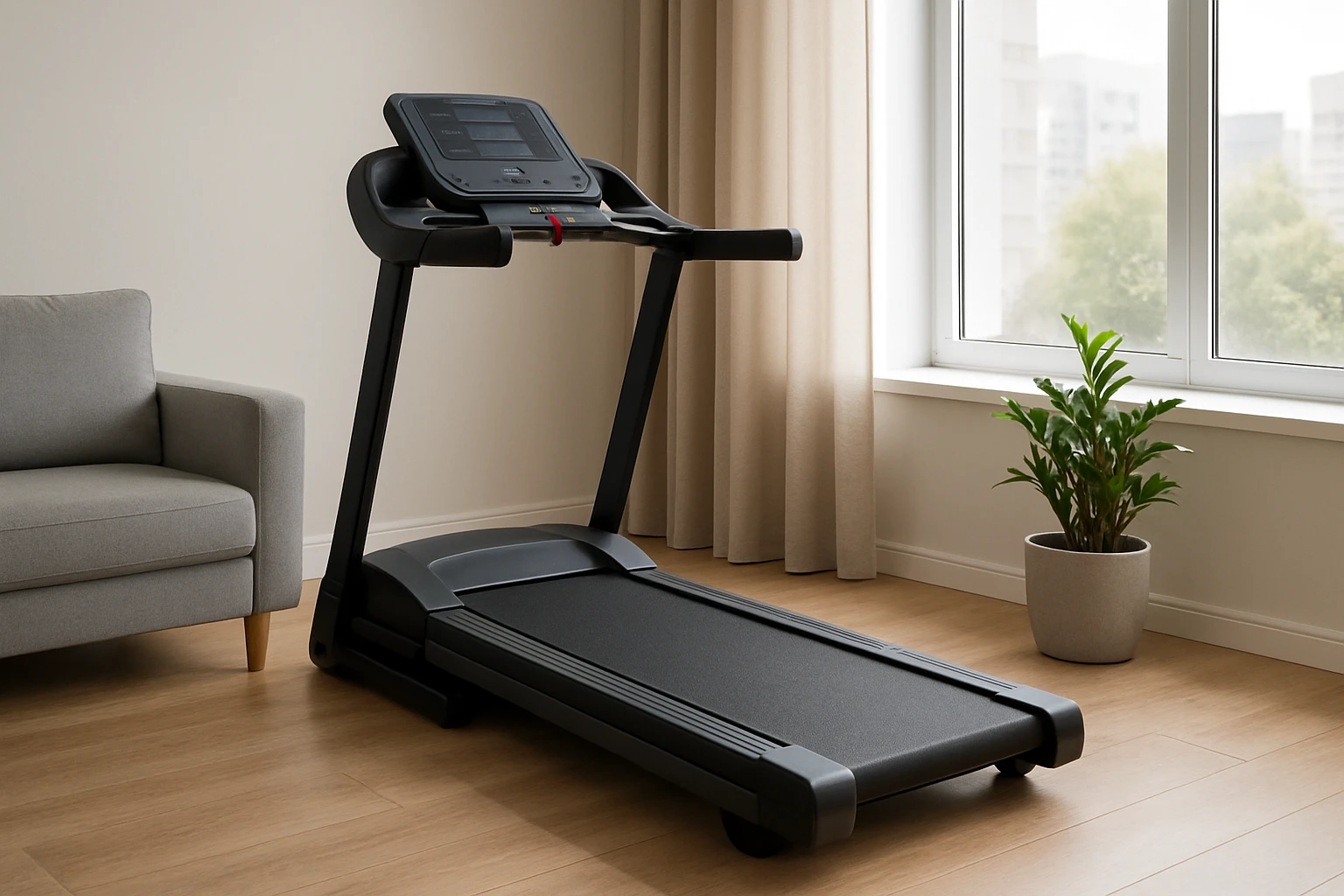
Complete Guide: How to Calculate Floor Load for a Treadmill in an Apartment (PSF, Joists & Reinforcement)
Introduction
Apartment dwellers who wish to maintain a regular cardio routine often wonder whether their flooring can support the weight and dynamic forces of a treadmill. This guide explains the essential concepts of pounds per square foot (PSF), joist capacity, and reinforcement methods. Readers will learn how to perform accurate calculations, evaluate existing structures, and select floor‑protection products that reduce vibration and prevent damage.
The information presented combines engineering fundamentals with practical product recommendations. By the end of the article, one will be able to determine whether a treadmill can be safely placed on a typical apartment floor and, if necessary, implement cost‑effective solutions.
All calculations assume standard residential construction in the United States, but the principles apply broadly to other regions with similar building codes.
Let us begin by establishing the background knowledge required for reliable floor‑load analysis.
Background / Context
Residential floor systems are designed to support live loads of approximately 40 PSF for residential areas and 30 PSF for corridors, as defined by the International Residential Code (IRC). A treadmill, however, introduces a concentrated static load (the weight of the machine) and a dynamic load (the impact of each foot strike). Both must be accounted for in the design.
Key terms include:
- PSF (Pounds per Square Foot): The amount of weight distributed over one square foot of floor area.
- Joist Span: The distance between two supporting beams or walls.
- Shear Capacity: The ability of a joist to resist forces that cause layers of material to slide past each other.
- Deflection: The amount a floor bends under load; excessive deflection leads to squeaking and structural fatigue.
Typical engineered wood joists (2×10) spanning 12 feet can safely support about 50 PSF when spaced 16 inches on center. Concrete slabs often have higher capacity, but they may still require reinforcement if the treadmill’s dynamic load exceeds design limits.
Understanding these concepts enables the homeowner to decide whether reinforcement is required or whether a protective mat alone will suffice.
Assessing the Treadmill Load
The first step is to obtain the treadmill’s specifications. Manufacturers usually list the machine’s weight and the maximum user weight. For example, a mid‑range treadmill may weigh 200 lb and accommodate a user up to 250 lb, resulting in a combined static load of 450 lb.
Dynamic loading can be approximated by multiplying the static load by a factor of 1.5 to 2.0, depending on the speed and incline settings. A conservative approach uses a factor of 2.0, yielding an effective load of 900 lb for the example above.
Next, determine the footprint of the treadmill. If the machine occupies a 2 ft × 3 ft area, the effective PSF is calculated as follows:
Effective Load (lb) ÷ Footprint (ft²) = PSF
900 lb ÷ 6 ft² = 150 PSF
In this scenario, the treadmill exerts 150 PSF, which is well above the typical residential design load. Reinforcement or a high‑quality floor‑protection mat becomes necessary.
Below are product recommendations that address both load distribution and vibration reduction.
Floor‑Protection Products and Their Role
Floor‑protection mats serve two primary functions: they spread the treadmill’s load over a larger area, thereby reducing PSF, and they dampen vibration, protecting both the floor and the apartment’s neighbors.
The first product to consider is the Fitvids Treadmill Mat. This 1/4‑inch high‑density PVC mat offers professional‑grade surface protection and a non‑slip textured top. At a price of $44.99 and a rating of 4.6/5 from 3,252 reviews, it provides impact resistance for heavy equipment such as barbells and kettlebells, making it suitable for treadmill use.
Key features include shock‑absorbing cushioning, positive traction control, and universal compatibility with hardwood, tile, vinyl, and low‑pile carpet. The mat’s thickness helps to lower the effective PSF from 150 PSF to roughly 80 PSF when the treadmill is placed centrally on the mat.
For users seeking a larger surface area, the TONINT Bike and Treadmill Mat measures 47.3 in × 23.6 in (approximately 7.7 ft²). Priced at $19.99 with a 4.2/5 rating from 1,852 reviews, it is constructed from odorless rubber that reduces noise and vibration. The dense rubber absorbs impact, further decreasing PSF and protecting the floor from sweat and oil.
Another versatile option is the WERCHO Foldable Treadmill Mat. This 4 mm thick PVC mat folds for storage and measures 68 in × 24 in (11.3 ft²). At $19.99 and a rating of 4.3/5 from 544 reviews, it offers heavy‑duty protection, waterproofing, and a non‑slip surface. Its foldable design is ideal for apartments with limited storage space.
For those who prefer interlocking foam tiles, the BeMaxx EVA Foam Interlocking Gym Mats provide a modular solution. The 18‑piece set covers 18 ft², each tile measuring 12.6 in × 12.6 in × 0.4 in. Priced at $25.99 with a 4.4/5 rating from 21,357 reviews, the EVA foam offers cushioning, impact dampening, and easy cleaning. While the individual tiles are thinner than the PVC mats, the combined area reduces PSF effectively when multiple tiles are arranged beneath the treadmill.
Finally, the Cycleclub 6mm Bike Mat is a 30 in × 60 in (12.5 ft²) mat designed for Peloton and similar equipment. At $27.98 and a 4.7/5 rating from 2,685 reviews, its 6 mm thickness and anti‑slip texture provide superior load distribution and moisture resistance. Although marketed for bikes, the mat’s size and durability make it a strong candidate for treadmill placement.
Comparison / Selection Guide
Choosing the appropriate floor‑protection product depends on three primary criteria: size of treadmill footprint, desired load reduction, and storage constraints.
| Product | Dimensions (ft²) | Thickness | Price | Rating | Best For |
|---|---|---|---|---|---|
| Fitvids Treadmill Mat | ~6 ft² | 0.25 in | $44.99 | 4.6/5 (3,252) | High impact protection, non‑slip surface |
| TONINT Bike & Treadmill Mat | ~7.7 ft² | Rubber (≈0.2 in) | $19.99 | 4.2/5 (1,852) | Noise reduction, budget‑friendly |
| WERCHO Foldable Treadmill Mat | ~11.3 ft² | 0.16 in (4 mm) | $19.99 | 4.3/5 (544) | Space‑saving, heavy‑duty |
| BeMaxx EVA Foam Interlocking Mats | 18 ft² (modular) | 0.4 in | $25.99 | 4.4/5 (21,357) | Custom layout, lightweight |
| Cycleclub 6mm Bike Mat | 12.5 ft² | 0.24 in (6 mm) | $27.98 | 4.7/5 (2,685) | Thickest protection, versatile |
When the treadmill’s PSF exceeds 100, a mat with at least 0.25 in thickness and a larger footprint is advisable. For apartments with limited storage, the foldable WERCHO mat offers the best compromise between size and thickness.
If budget constraints dominate the decision, the TONINT rubber mat provides adequate noise reduction at the lowest price point, though its thinner profile may require supplemental reinforcement.
Homeowners who desire a customized layout can assemble the BeMaxx interlocking tiles to match the exact treadmill dimensions, ensuring uniform load distribution across the entire floor area.
Best Practices & Tips
- Measure the joist span. Locate the ceiling joists using a stud finder and note the distance between supports. Joists longer than 12 feet may require sistering with additional lumber.
- Calculate the effective PSF. Use the formula provided earlier, applying a conservative dynamic factor of 2.0.
- Distribute the load. Place the treadmill on a mat that extends at least 6 inches beyond each side of the machine. This reduces point loading on the joists.
- Secure the mat. Ensure the mat’s non‑slip surface is engaged by pressing down firmly; some products, such as the Fitvids mat, have textured undersides that grip the subfloor.
- Consider reinforcement. If calculations reveal PSF above 100, install a ½‑in plywood sub‑panel perpendicular to the joists before laying the mat. This spreads the load across multiple joists.
- Maintain ventilation. PVC and rubber mats can emit a mild odor when first unpacked. Air the mat in a well‑ventilated area for 24 hours before use.
- Regularly inspect the floor. Check for signs of sagging, squeaking, or moisture accumulation every few months. Early detection prevents long‑term damage.
Following these steps ensures that the treadmill operates safely without compromising the structural integrity of the apartment floor.
Frequently Asked Questions
- What is the minimum PSF a typical apartment floor can support? Most residential codes require a minimum of 40 PSF for living spaces, but joist design often allows up to 50 PSF when spaced 16 inches on center.
- Can I place a treadmill directly on hardwood without a mat? Direct placement is not recommended because the concentrated load can dent the wood and increase vibration transmission to neighboring units.
- How thick should a protective mat be for a 250‑lb treadmill? A thickness of at least 0.25 in (1/4 in) combined with a footprint that exceeds the treadmill’s dimensions by 6 inches on each side is advisable.
- Do I need to reinforce the joists if I use a large mat? If the calculated PSF after mat placement remains below 100 PSF, reinforcement is typically unnecessary. For higher values, sistering joists or adding a plywood sub‑panel is prudent.
- Will a rubber mat reduce noise for downstairs neighbors? Yes. Dense rubber, such as that used in the TONINT mat, absorbs vibration and significantly lowers audible impact.
- Are interlocking foam tiles safe for heavy equipment? They are suitable for moderate loads; however, for high‑impact treadmills, a thicker PVC or rubber mat provides superior durability.
- How do I clean a treadmill mat? Most mats are water‑resistant. Wipe with a damp cloth and mild detergent. Avoid harsh chemicals that could degrade the PVC or rubber.
Conclusion
Calculating floor load for a treadmill in an apartment involves understanding PSF, assessing joist capacity, and applying appropriate reinforcement or protective measures. By measuring the treadmill’s static and dynamic loads, comparing them to the floor’s design limits, and selecting a suitable mat, one can protect both the flooring and the building’s structural integrity. The products highlighted in this guide—Fitvids Treadmill Mat, TONINT Bike and Treadmill Mat, WERCHO Foldable Treadmill Mat, BeMaxx EVA Foam Interlocking Mats, and Cycleclub 6mm Bike Mat—offer a range of solutions that address load distribution, vibration reduction, and space constraints. Implementing the best practices outlined will enable a safe and enjoyable home‑cardio experience without compromising the apartment’s durability.
Products Featured in This Guide
Fitvids Treadmill Mat
Price: $44.99 | Rating: 4.6/5 (3,252 reviews)
Featured because it provides professional‑grade surface protection, shock‑absorbing cushioning, and a non‑slip texture that reduces the effective PSF of most treadmills.
TONINT Bike and Treadmill Mat
Price: $19.99 | Rating: 4.2/5 (1,852 reviews)
Featured for its dense rubber construction, noise‑reducing properties, and affordability, making it a solid budget option for load distribution.
WERCHO Foldable Treadmill Mat
Price: $19.99 | Rating: 4.3/5 (544 reviews)
Featured because its foldable design saves storage space while delivering 4 mm heavy‑duty protection and waterproof performance.
BeMaxx EVA Foam Interlocking Gym Mats
Price: $25.99 | Rating: 4.4/5 (21,357 reviews)
Featured for its modular layout, lightweight EVA foam, and ability to customize the coverage area to match any treadmill footprint.
Cycleclub 6mm Bike Mat
Price: $27.98 | Rating: 4.7/5 (2,685 reviews)
Featured for its extra thickness, anti‑slip texture, and versatility across multiple equipment types, providing the highest level of load distribution among the listed options.