Introduction
Understanding the difference between deck wear and belt wear is essential for maintaining a folding treadmill in optimal condition. This guide will teach the reader how to recognize the symptoms of each problem, perform quick diagnostic tests, and apply the appropriate fixes. By following the steps, one can avoid costly repairs and extend the lifespan of the equipment. The information is presented in a professional manner that balances accessibility with technical depth.
What You’ll Need
- SHEJIO Horizon T‑101 Treadmill Belt – replacement belt for Horizon models.
- SHEJIO NordicTrack T 6.5 S Belt – replacement belt for NordicTrack models.
- SEKODAY Silicone Treadmill Lubricant – silicone‑based lubricant with applicator tube.
- CCGeass Treadmill Belt Lubricant – silicone lubricant with precision twist cap.
- Spot On Treadmill Lubricant – premium silicone lubricant with patented 8‑inch tube.
- Phillips screwdriver, soft cloth, flashlight, and a flathead pry tool.
Step 1: Visual Inspection of the Deck
The deck is the flat surface that supports the running belt, and its condition directly influences belt performance. Begin by unplugging the treadmill and positioning a flashlight beneath the deck to reveal any cracks, warping, or missing slats. Look for uneven gaps where the belt rides higher on one side, which indicates deck deformation. If the deck shows visible damage, the next step is to replace or reinforce it before installing a new belt.
Step 2: Visual Inspection of the Belt
After confirming the deck is sound, examine the belt for signs of wear such as fraying edges, discoloration, or a glossy sheen caused by excess friction. A belt that has stretched beyond its original width will produce a “slipping” sensation during use. The SHEJIO Horizon T‑101 Treadmill Belt features a two‑layer commercial design that reduces wear by 20 % compared with traditional PVC belts, making it a reliable replacement for worn Horizon belts.
For NordicTrack owners, the SHEJIO NordicTrack T 6.5 S Belt offers identical durability and pre‑lubrication, ensuring a seamless fit and reduced installation time.
Step 3: Quick Test – Belt Alignment Check
Re‑connect power and set the treadmill to a low speed of 2 mph. Observe the belt from the side; it should track centrally without drifting to either side. If the belt drifts, loosen the rear tension bolts by a quarter turn, then manually center the belt before retightening. Excessive drift after adjustment often points to a warped deck rather than a belt issue.
Step 4: Quick Test – Deck Flex Test
With the treadmill powered off, press firmly on the deck at several points while the belt is removed. A healthy deck will exhibit a slight give but return to its original shape quickly. If the deck feels spongy or retains an indentation, the deck material has degraded and should be replaced. This test helps differentiate deck wear from belt wear when visual cues are ambiguous.
Step 5: Lubrication Assessment
Even a brand‑new belt can generate noise and premature wear if the deck is not properly lubricated. Locate the lubrication ports on the deck; most modern folding treadmills use silicone‑based lubricants. Apply a thin, even layer of silicone oil using a dedicated applicator. The SEKODAY Silicone Treadmill Lubricant includes a hard application tube that reaches the full width of the belt without loosening it, making the process efficient and clean.
Alternative options include the CCGeass Treadmill Belt Lubricant, which provides a precision twist cap and stainless‑steel extension tube for targeted application, and the Spot On Treadmill Lubricant, which offers a patented 8‑inch tube designed for deep center‑deck coverage.
Step 6: Replace a Worn Belt
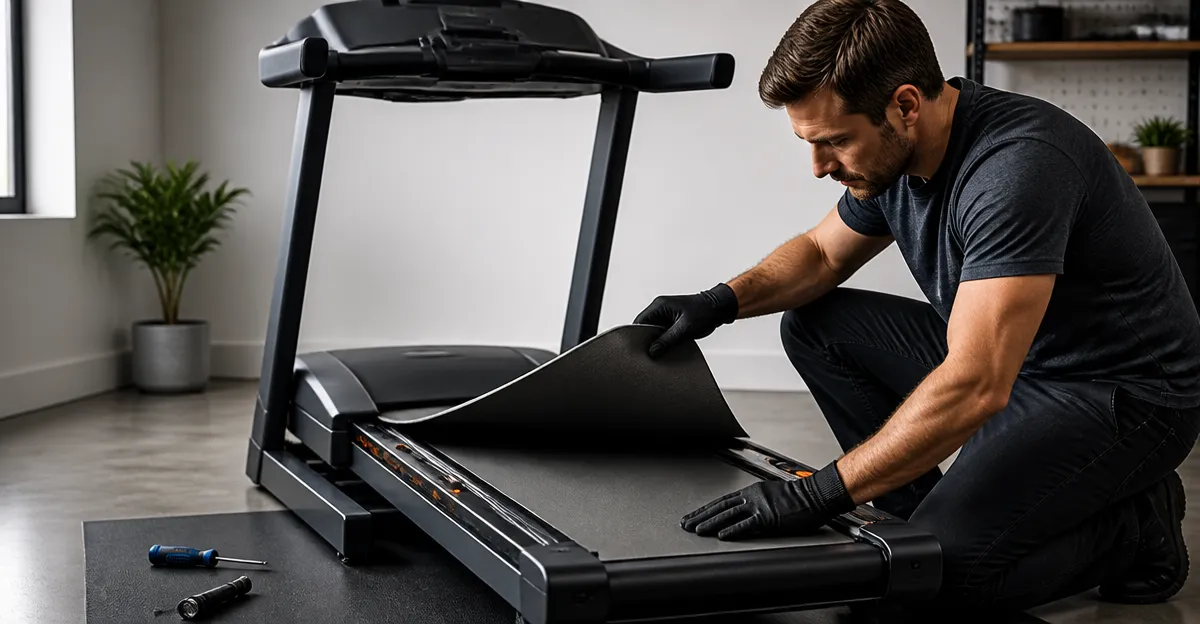
If visual inspection and tests confirm belt wear, remove the old belt by loosening the rear tension bolts and sliding the belt off the rollers. Clean the deck with a soft cloth to remove any residual lubricant or debris. Install the new belt—either the SHEJIO Horizon T‑101 Belt for Horizon models or the SHEJIO NordicTrack T 6.5 S Belt for NordicTrack models—by aligning the markings on the belt with the rollers and tightening the tension bolts evenly.
Both replacement belts arrive pre‑lubricated, reducing the initial friction and extending the first year of service. The included anti‑static conductive wires improve safety by preventing static buildup during operation.
Step 7: Post‑Installation Calibration
After installing a new belt, power the treadmill and run it at a low speed for five minutes to allow the belt to settle. Observe the belt tracking and listen for any abnormal sounds. If the belt continues to drift, repeat the alignment adjustment from Step 3. Finally, apply a second thin coat of silicone lubricant to ensure optimal glide.
Tips & Pro Tips
- Perform a lubrication routine at least once a year; regular maintenance reduces friction, noise, and motor strain.
- When using silicone lubricants, avoid over‑application; excess oil can cause the belt to slip.
- Store replacement belts in a cool, dry environment to prevent material degradation before installation.
- Use a flashlight and a small mirror to inspect hard‑to‑see areas of the deck for micro‑cracks.
- Record the date of each maintenance activity in a logbook to track service intervals.
Troubleshooting
| Problem | Possible Cause | Solution |
|---|---|---|
| Noise persists after lubrication | Deck surface uneven or worn | Replace deck or add a deck pad according to manufacturer guidelines. |
| Belt slips at high speed | Insufficient tension | Adjust rear tension bolts by small increments until belt tracks centrally. |
| Sudden stop (E1 error) | Old belt causing motor overload | Install a new SHEJIO replacement belt and verify proper lubrication. |
Conclusion
Diagnosing deck versus belt wear on a folding treadmill requires careful visual inspection, simple alignment tests, and proper lubrication. By following the structured steps, the reader can identify the root cause of performance issues, apply the correct fix, and maintain the equipment for years to come. Regular maintenance, including annual lubrication and periodic deck checks, prevents unexpected breakdowns and preserves the treadmill’s warranty. One should feel confident that the treadmill will operate safely and quietly after completing this guide.
Products Mentioned in This Guide
Frequently Asked Questions
How can I tell if my treadmill has deck wear instead of belt wear?
Deck wear shows uneven surface, squeaking, or a noticeable dip when the belt is removed, while belt wear appears as fraying, cracks, or uneven tension on the moving belt.
What quick test can I perform to diagnose belt versus deck problems?
Run the treadmill at low speed, then stop and lift the belt; if the deck feels smooth and the belt slides evenly, the issue is likely belt wear, but a rough or uneven deck indicates deck wear.
When should I replace the treadmill belt versus just lubricating it?
Replace the belt if it shows cracks, fraying, or permanent stretching; lubricate only when the belt is still intact but makes noise or feels stiff.
Is silicone treadmill lubricant suitable for both deck and belt maintenance?
Silicone lubricant is designed for the belt and deck surface to reduce friction, but it won’t fix physical wear; it’s best used after cleaning and before re‑installing a good‑condition belt.
Can regular maintenance prevent deck wear on a folding treadmill?
Yes, keeping the deck clean, regularly lubricating the belt, and avoiding excessive weight or impact can significantly delay deck wear and extend treadmill life.